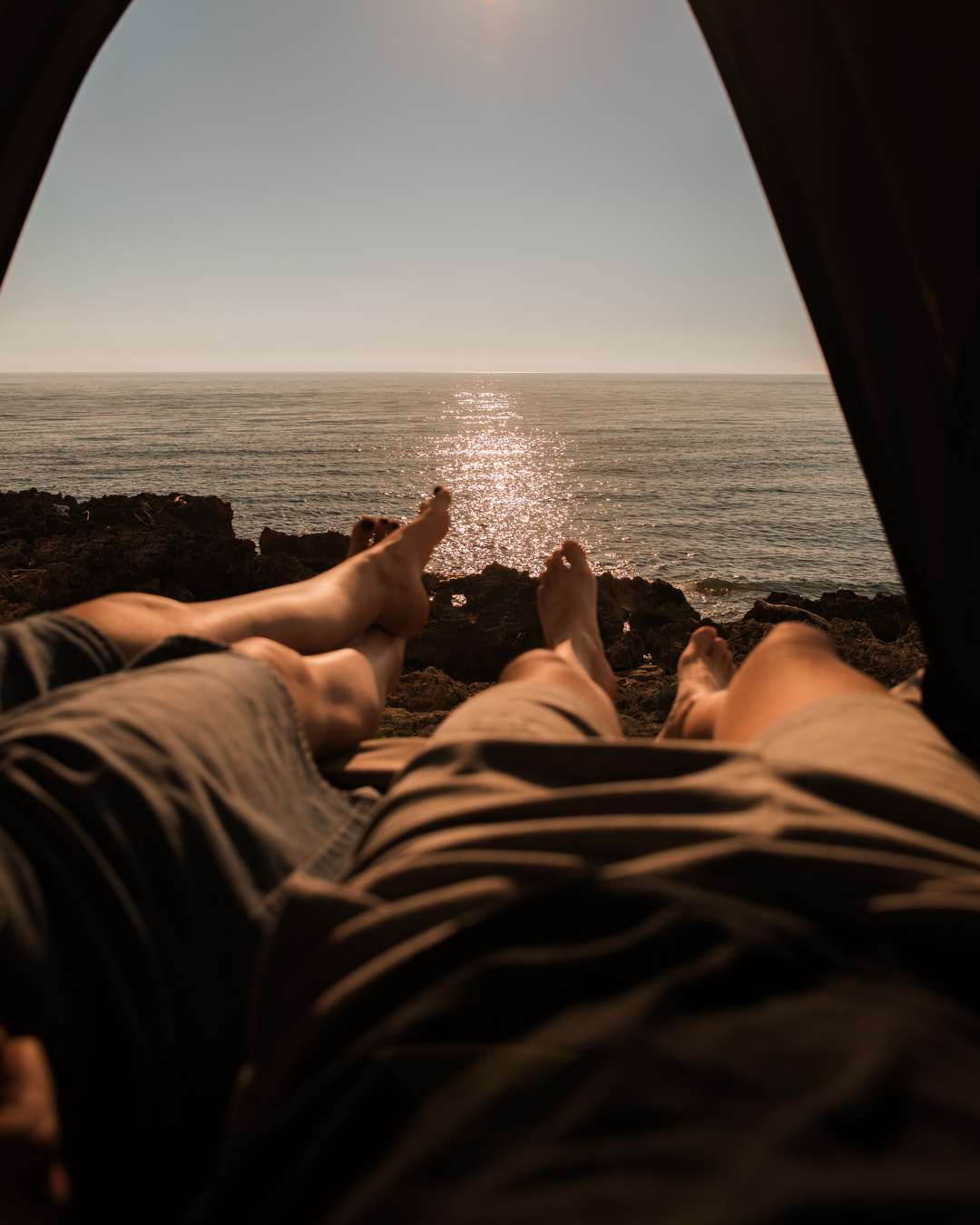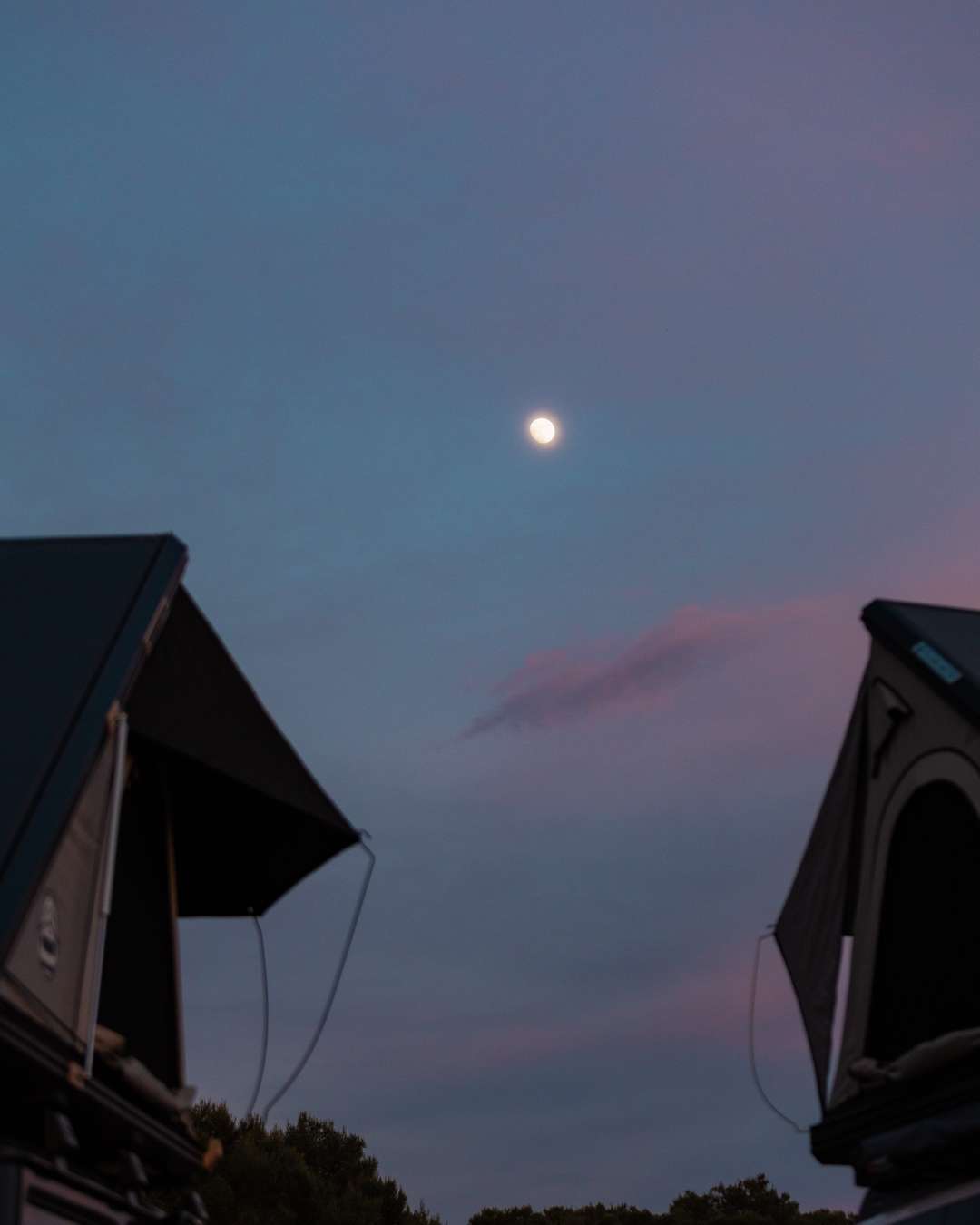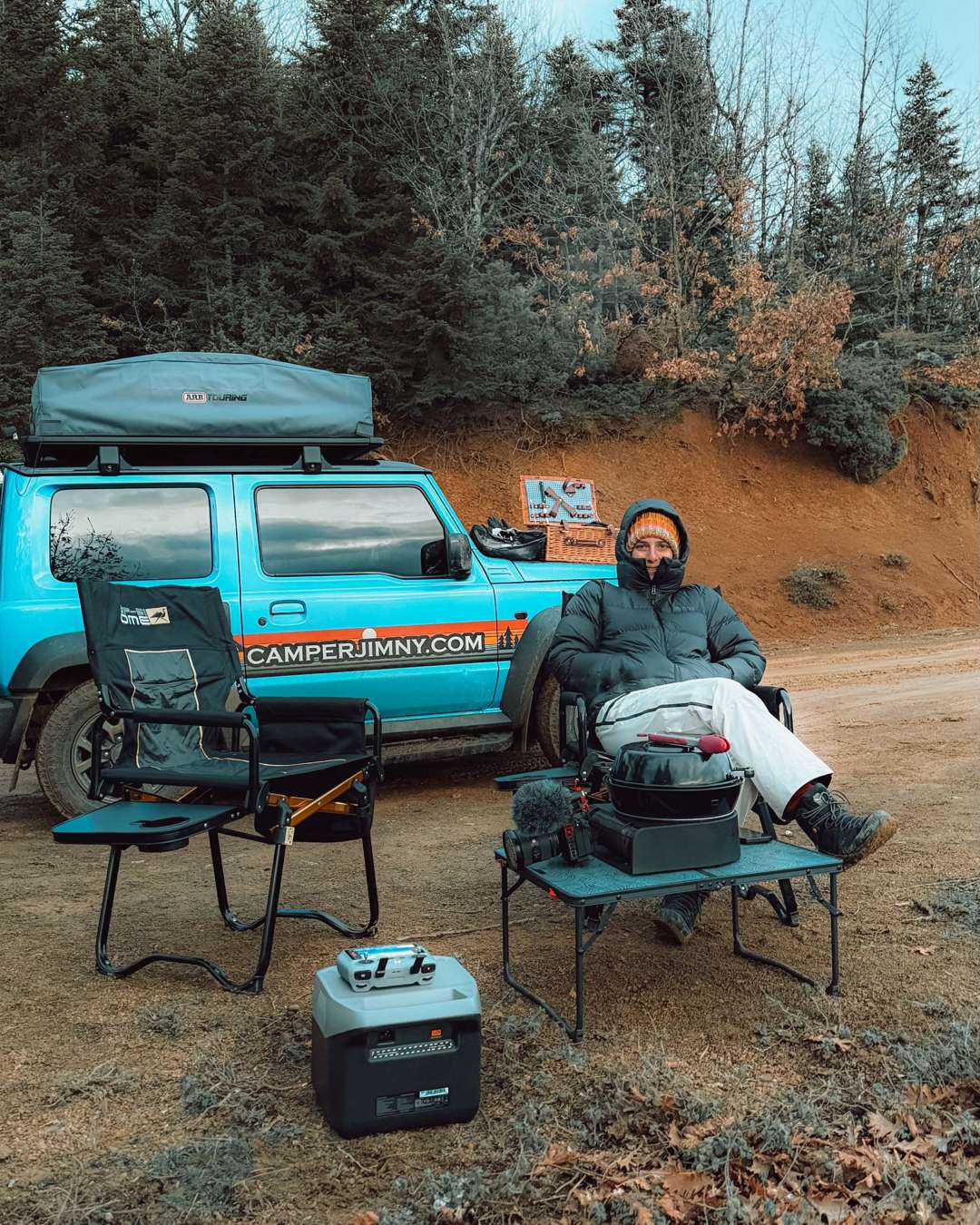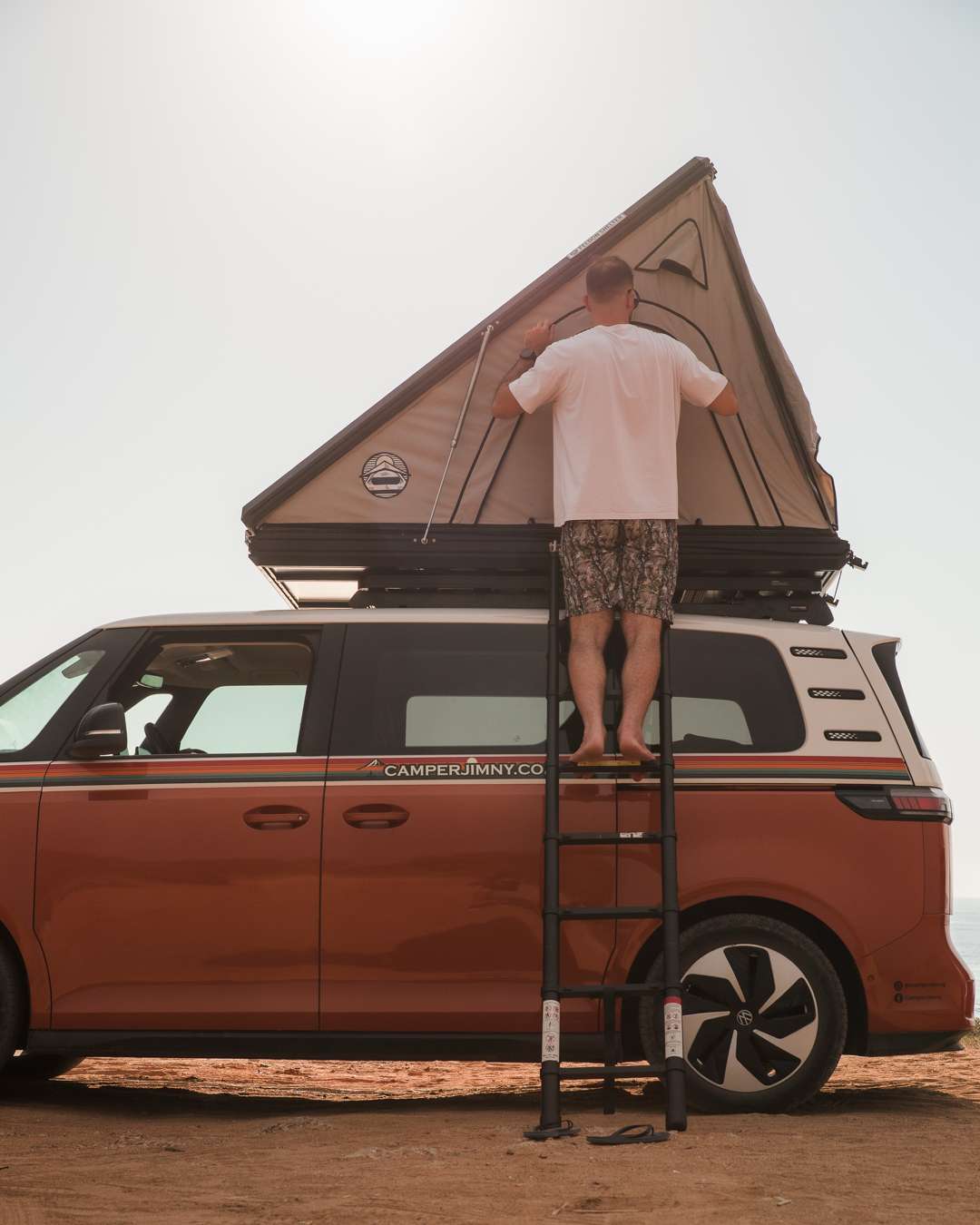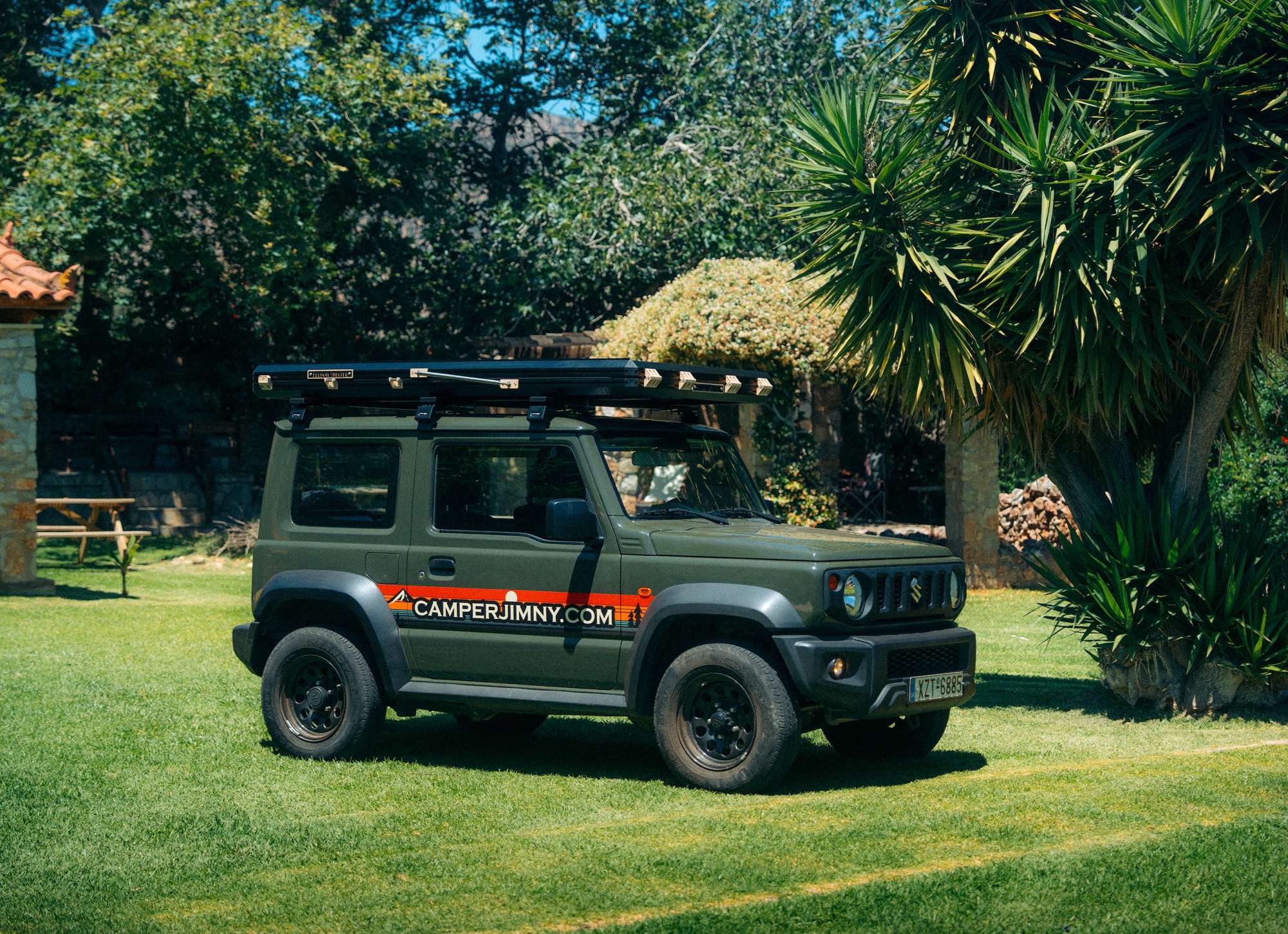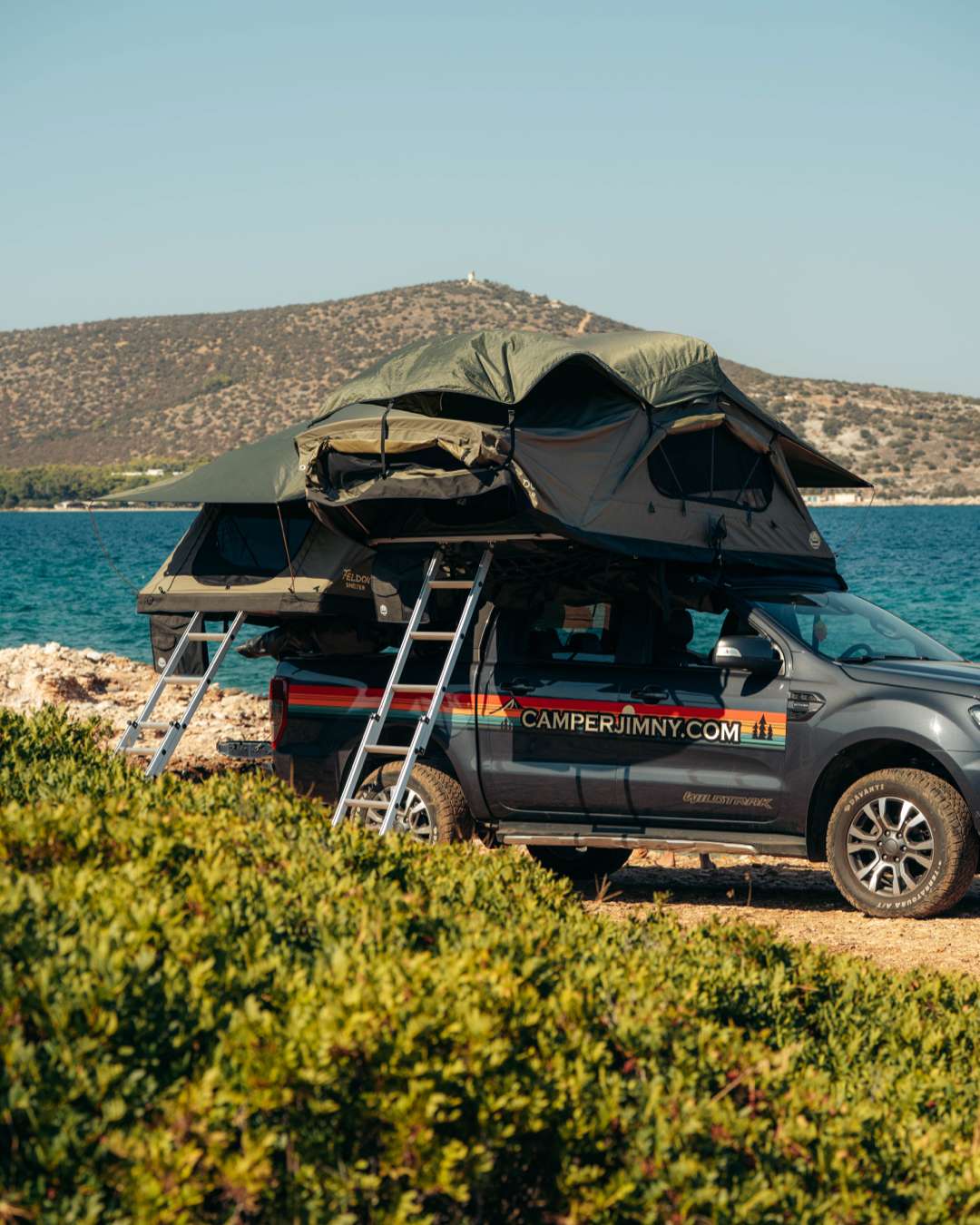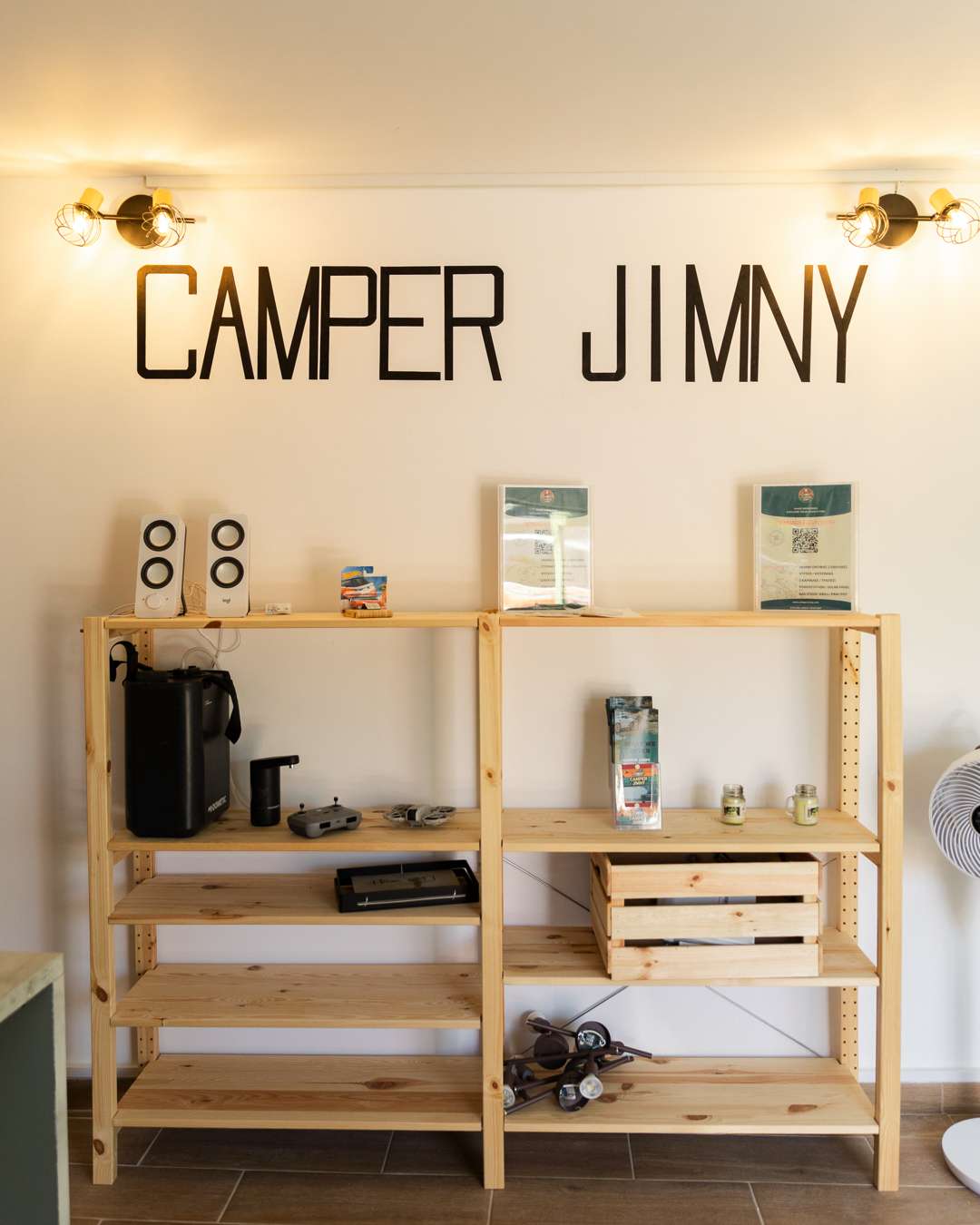
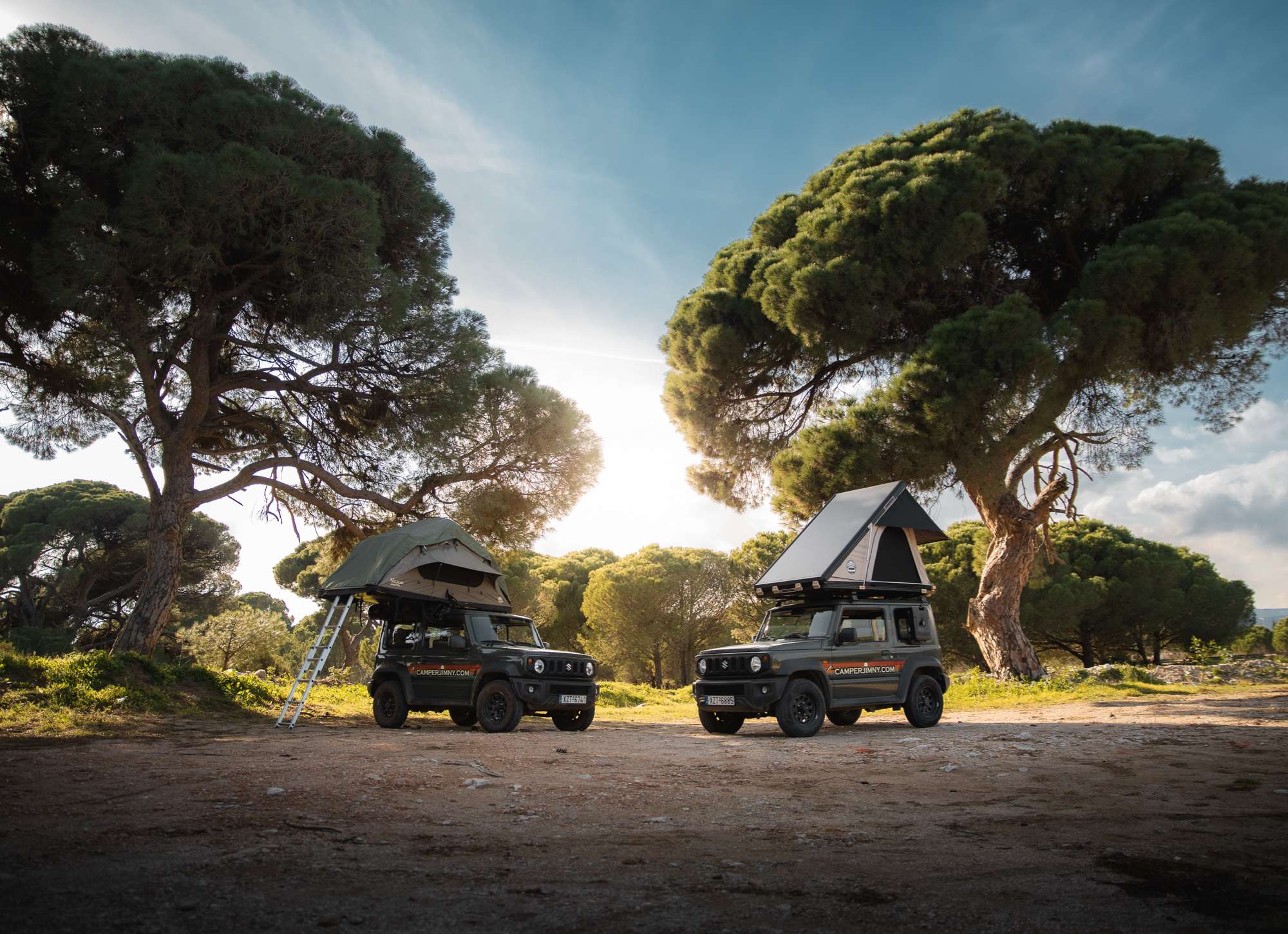
Georgios and Katerina run CamperJimny near Athens, hiring out Jimnys equipped with rooftop tents and the camping gear you need for a road trip. Having spent plenty of time working out how to camp comfortably with our own Jimny, the idea of flying over and collecting one already set up is very appealing. Especially when they know the roads worth taking.
I wanted to hear where they’d send someone with a week to explore, and what you need to know before heading off. Their answers have given me plenty to think about. There’s a suggested route through the Peloponnese that I can see myself spending considerably longer than a week on.
We also get into life with a small camper, from what to pack to finding somewhere to spend the night. Put the kettle on for this one. Georgios and Katerina have been generous with their time, and there’s a lot here for anyone tempted to try it.
- Tell us about the team at CamperJimny?
- For someone arriving in Greece with a week to explore and no fixed plan, what kind of trip would you send them on?
- What does travelling Greece in one of your campers let people experience that they would miss on a normal holiday?
- What are some of the places or landscapes that surprise your guests most?
- Describe your idea of a perfect day travelling in a Jimny camper. Where do you wake up, where are you driving and where do you end the day?
- The Jimny is obviously a pretty small vehicle. Why does it work so well for exploring Greece?
- Where does the Jimny come into its own compared with a conventional campervan?
- Do guests need any previous off-road or camping experience, or can someone turn up having never done anything like this before?
- What is included with the vehicle when somebody collects it, and what should they bring themselves?
- What is sleeping in a rooftop tent in Greece actually like?
- What time of year would you choose for your own road trip around Greece, and why?
- Most visitors know the Greek islands. Where should an adventurous traveller look on the mainland instead?
- What are the rules around camping and travelling off the beaten track that visitors need to understand before they arrive?
- What is the most memorable trip or story you have heard from somebody who rented one of your vehicles?
- Have any guests discovered somewhere through CamperJimny that even you hadn’t expected them to find?
- What has gone wrong on a trip that makes a good story now?
- If somebody only had three or four nights, where would you tell them to go? What would you suggest if they had ten days?
- What food, roadside stops or local experiences should people make room for while travelling?
- You’ve recently moved CamperJimny into new premises. What has changed, and what does the new base allow you to do that you couldn’t before?
- Where did the original idea for CamperJimny come from?
- You now have vehicles beyond the Jimny. How do you help somebody choose between a Jimny, the Ranger and CamperBuzz?
- What are you building towards next with CamperJimny?
- Finally, somebody reading this in the UK has just decided that driving around Greece and sleeping on the roof of a Jimny sounds like a brilliant idea. What would you tell them before they book the flight?
Tell us about the team at CamperJimny?
CamperJimny is basically the two of us — Georgios and Katerina.
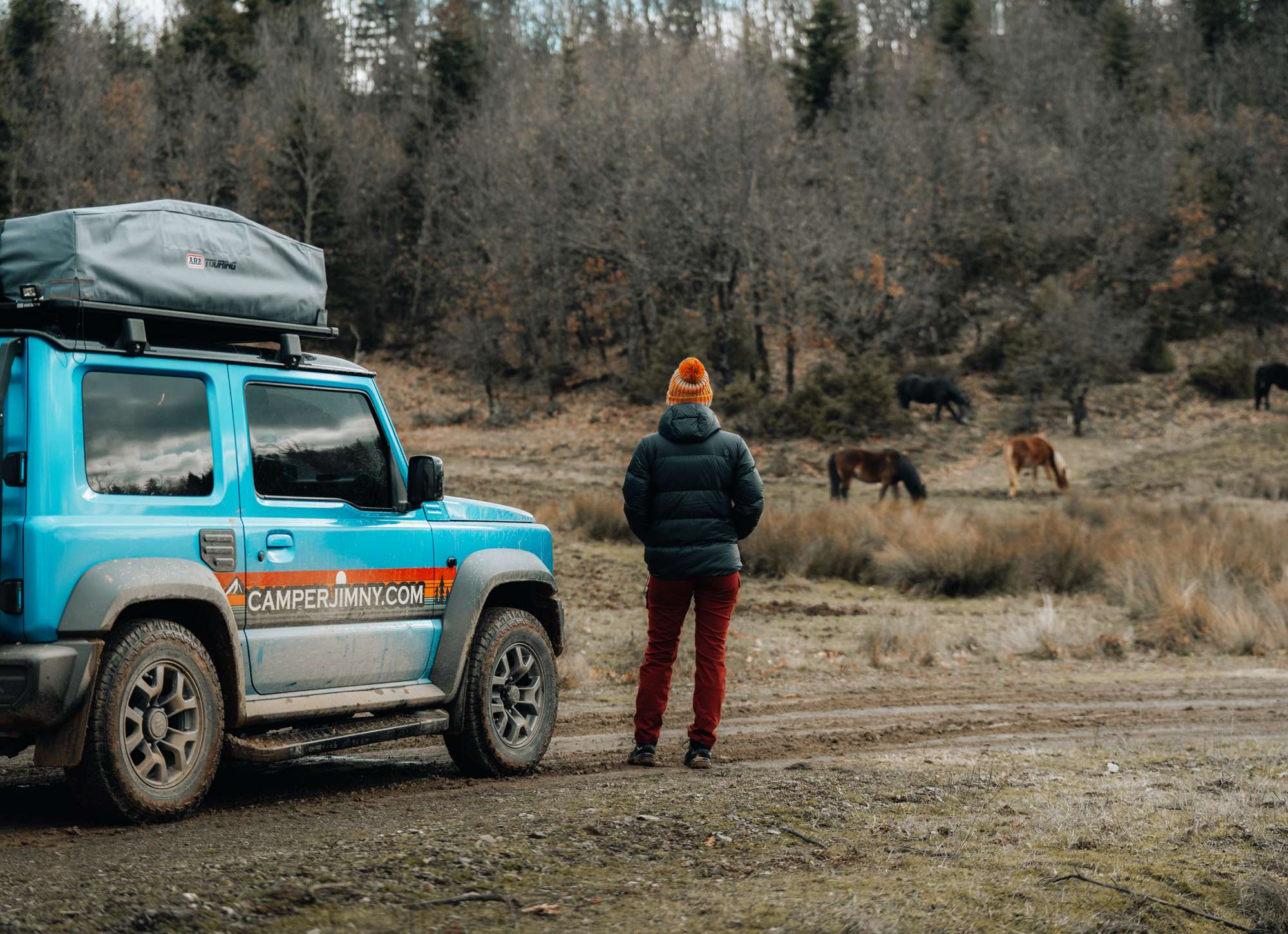
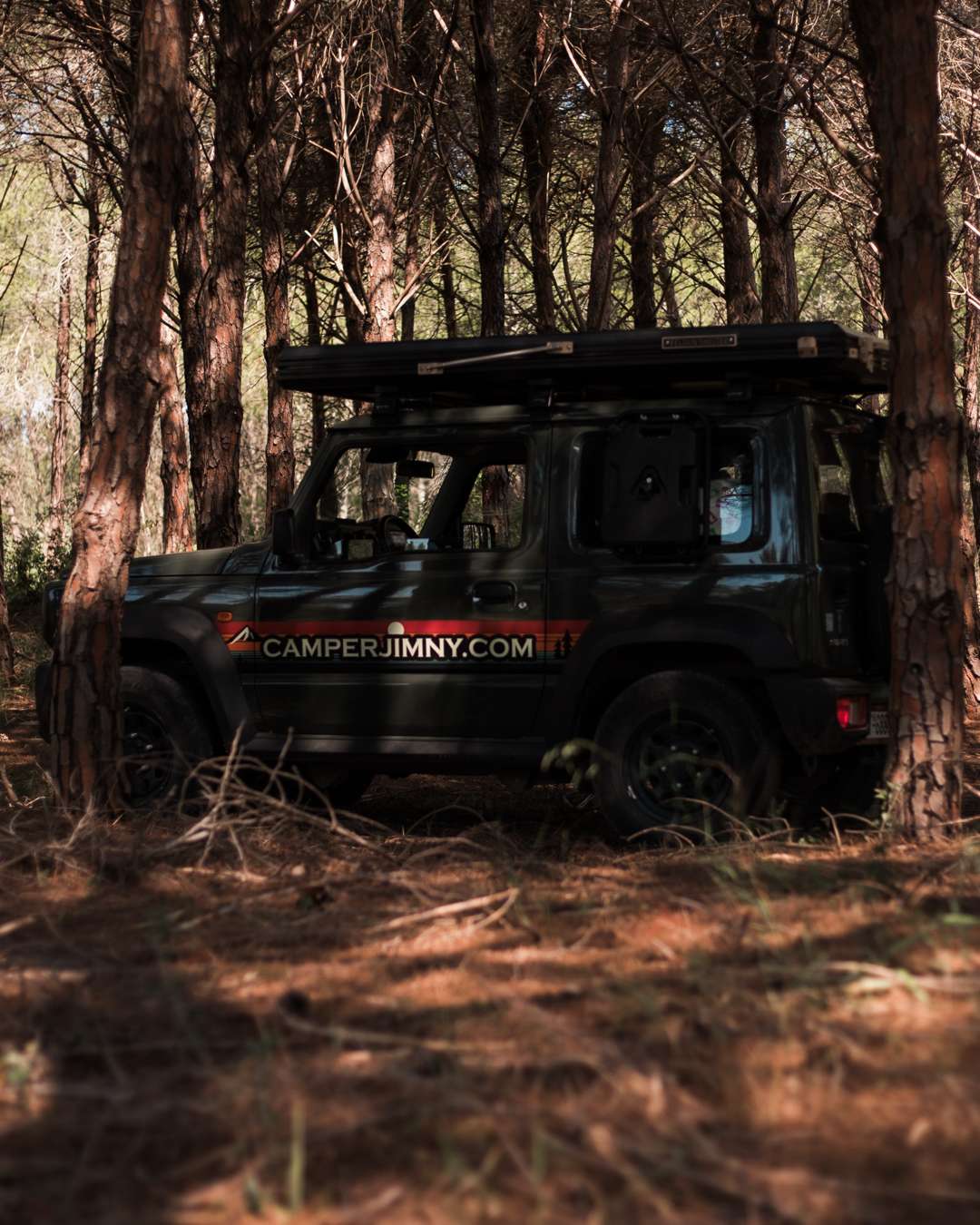
We rent Suzuki Jimnys and a few other 4×4 campers with rooftop tents, from our base near Athens, for road trips around mainland Greece.
We started it because we love the idea of getting away from the usual way of travelling. Not just driving somewhere, checking into a hotel and moving on, but actually being out there — waking up in nature, cooking outside, opening the tent and feeling like the trip has properly started.
And the funny thing is, CamperJimny isn’t only for experienced overlanders. A lot of our guests have never slept in a rooftop tent before.
They like the idea, but usually they have the same questions: What do I need to bring? Where do I stay? How does everything work? What happens if I get stuck or something goes wrong?
So we try to make that part easy.
The vehicles go out ready for the trip, with the camping setup and the equipment already sorted. You don’t need to be an expert. You just need to bring your clothes, some food and the willingness to explore.
Katerina looks after the guests from the first message, helping them understand the vehicles, the trip and what to expect. I’m more on the vehicle side. The setups, equipment, testing and making sure everything works the way it should.
And that’s important to us: we use the vehicles ourselves. We travel in them, sleep in them and test the setups before asking a guest to do the same.
For us, CamperJimny is not really about renting a car.
It’s about making it easy for someone to get out of the city, slow down for a few days and experience Greece in a completely different way.
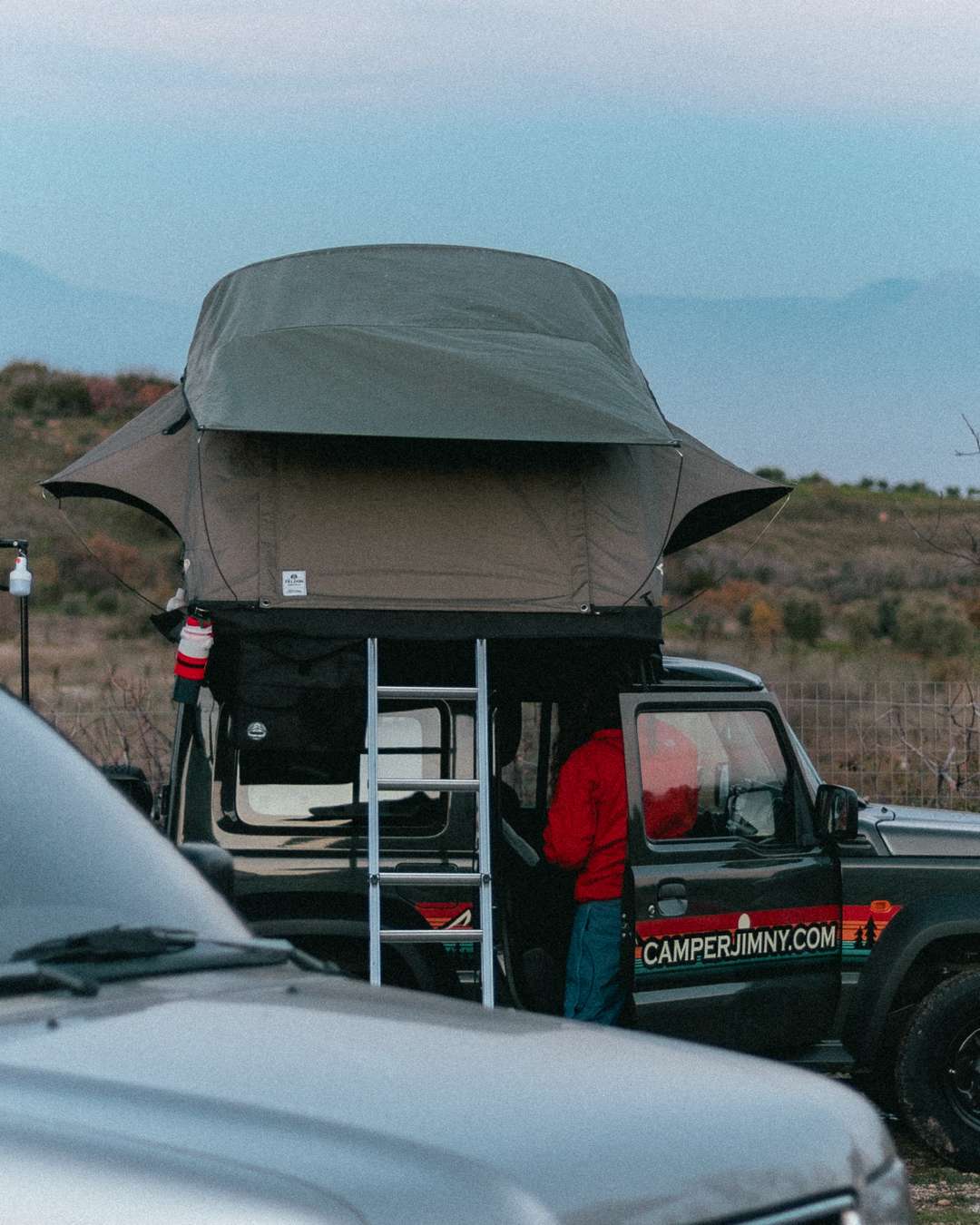
For someone arriving in Greece with a week to explore and no fixed plan, what kind of trip would you send them on?
If someone lands in Greece with a week, a CamperJimny and no fixed plan, most of the time we point them south — towards the Peloponnese.
It gives you a little bit of everything without spending the whole holiday behind the wheel. Sea, mountains, tiny villages, ancient sites, good food — and some roads where you can drive for quite a while without feeling like you’re following everyone else.
We usually suggest a loose loop rather than a fixed itinerary.
Start by heading towards the western Peloponnese. Around Zacharo, Kakovatos and further south you start finding those long stretches of beach where the landscape opens up and the pace changes completely. Outside the busiest part of summer, you can still find places that feel surprisingly quiet.
Then we’d slowly work our way south towards Mani.
That’s where the trip changes character completely.
The landscape gets rougher, the villages turn to stone, the roads get smaller and suddenly you have mountains falling almost straight into the sea. Areopoli and Limeni are obvious stops, but Mani is one of those places where we usually tell people not to plan every hour.
Keep driving south and eventually you reach Cape Tainaron — the southernmost point of mainland Greece. There’s a short walk out towards the lighthouse, and the whole place has this very remote feeling to it. Ancient tradition even associated the cape with an entrance to the Underworld.
From there, on the way back north, we’d bring them through Mystras. It’s an incredible Byzantine site built into the slopes of Taygetos, and it gives you something completely different again after several days of beaches and mountains.
Then, depending on how much time and energy they still have, we might add Nafplio, Nemea, Mycenae or Epidaurus before heading back towards Athens.
Nemea is especially nice because after several days on the road you can slow things down, visit a winery, taste some local wine and finish the trip in a completely different way.
With only seven days, we normally wouldn’t try to fit everything in.
Monemvasia, for example, is absolutely worth visiting — a medieval castle town sitting on a huge rock connected to the mainland by a narrow causeway — but it deserves time of its own. With ten days, I’d definitely start looking at adding it to the loop.
And really, we never hand someone a strict day-by-day itinerary anyway.
We normally ask a few questions first: beaches or mountains? Do you like driving or would you rather stop somewhere for two nights? Do you want history, hiking, food, wine, or just somewhere quiet?
Then we give them the shape of the trip and a few places we think are worth the detour.
The rest is better left a little open.
Some of the best messages we get from guests start with:
“We changed the plan…”
And usually that’s when the trip got interesting.

What does travelling Greece in one of your campers let people experience that they would miss on a normal holiday?
On a normal holiday, most of the time you choose where you’re sleeping first — and then the day slowly gets built around getting there.
With a camper, it works the other way around.
The road becomes part of the trip.
You stop because a beach looked good from above. You take a smaller road because you’re curious where it goes. You end up eating somewhere you never planned to visit, simply because you weren’t rushing to check into a hotel before a certain time.
And sometimes you find somewhere you really like and just stay a little longer.
That freedom is probably the biggest difference.
Then there are the mornings.
You unzip the tent and you’re already outside. You make a coffee, sit there for a while and see what the day looks like before deciding where you’re going next.
It’s a small thing, but it sets the tone for the whole day.
And after a couple of days, something changes a little.
You stop checking the clock all the time. You start noticing the weather, the light, the road, whether you feel like driving another hour or whether you’d rather stay where you are.
That’s when it starts feeling less like a holiday schedule and more like travelling.
You also get to see a side of Greece that many visitors miss.
The islands are beautiful and of course they’re a huge part of Greece, but the mainland gives you something different — mountains, quiet villages, long coastlines, forests, small roads and places where the journey between two destinations can be just as good as the destination itself.
And you don’t need to be an experienced camper to enjoy that.
You just need the freedom to change the plan.
That’s really what CamperJimny gives people — not a fixed itinerary, but the ability to follow the trip wherever it goes.
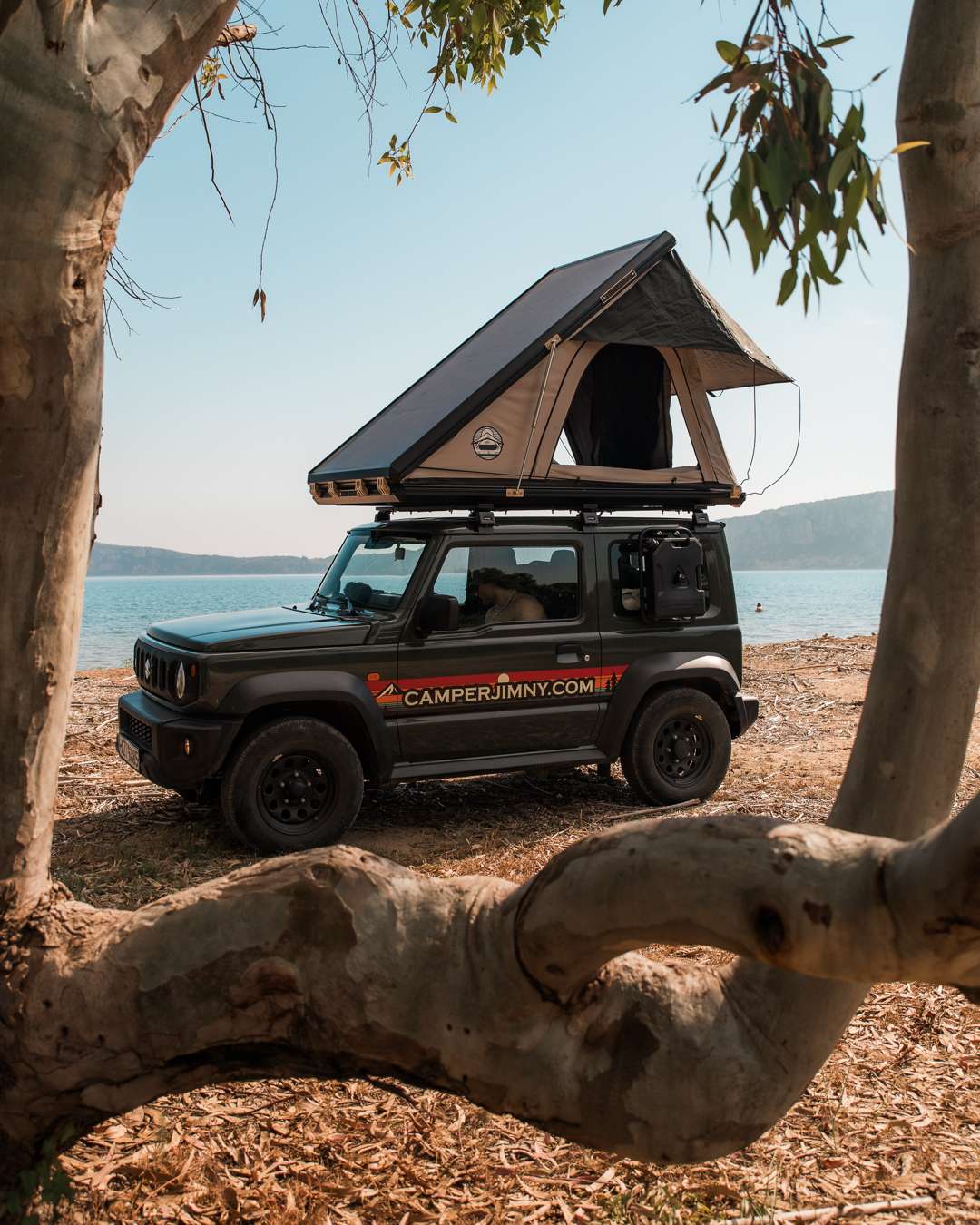
What are some of the places or landscapes that surprise your guests most?
Most people arrive in Greece with a picture already in their head — blue sea, dry landscapes, white villages and islands.
Then they start driving and realise Greece doesn’t really look like one thing.
The mountains are probably the biggest surprise.
Head north towards Zagori and the Pindos mountains and suddenly you’re driving through forests, deep valleys and stone villages, with proper mountain weather around you. For a lot of international guests, it’s nothing like the Greece they expected to find.
Then there are places like Meteora. You can see all the photographs beforehand, but driving towards those huge rock formations and seeing the monasteries sitting on top of them is still completely different in person.
Pelion is another landscape we really like because you can have thick green forest, mountain villages and the Aegean Sea almost in the same day. You can start somewhere high and cool and end up swimming a few hours later.
Further south, Mani feels almost like another country again. Bare rock, stone towers, small roads and mountains dropping into the sea. It has this raw, slightly wild character that people remember.
And one of the biggest surprises is simply how quickly everything can change.
You can wake up by the sea, drive for a couple of hours and spend the afternoon somewhere high in the mountains where the temperature is completely different.
Which brings us to something guests don’t always expect — the evenings.
Even in summer, once you go higher, it can get genuinely cool after sunset. People come to Greece expecting heat all the time and then suddenly they’re sitting outside the camper in a jacket, making dinner somewhere quiet in the mountains.
And strangely, those are often the moments they talk about when they come back.
Not necessarily the famous place they planned to visit — but somewhere they stopped because the road looked interesting and decided to stay.
That variety is probably what surprises people most about travelling Greece this way.
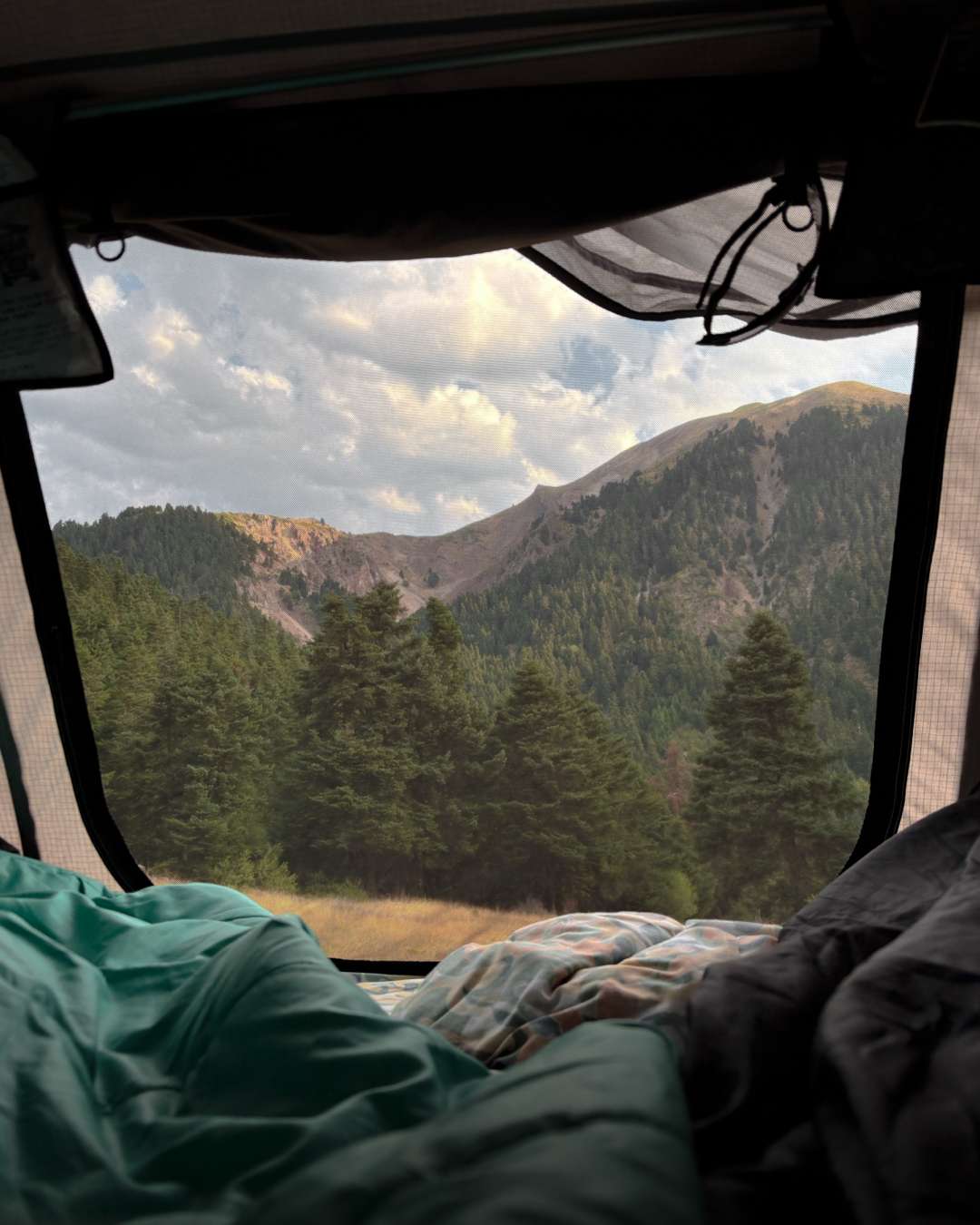
Describe your idea of a perfect day travelling in a Jimny camper. Where do you wake up, where are you driving and where do you end the day?
For me, the perfect day starts slowly.
No alarm. No rush.
You wake up because the light is coming through the tent, unzip it and just stay there for a minute.
Maybe it’s the sea in front of you. Maybe mountains. Maybe just somewhere completely quiet.
First thing is coffee.
Outside, still half asleep, with no real reason to look at the time.
If we’re near the sea, maybe a swim before breakfast. If we’re in the mountains, maybe you just sit there and listen to how quiet everything is.
Then breakfast — slowly.
And after that, you don’t immediately start packing.
You sit for a while. Have another coffee. Look around. Enjoy the fact that for once there isn’t anywhere you need to be.
That’s a big part of this kind of travelling for us.
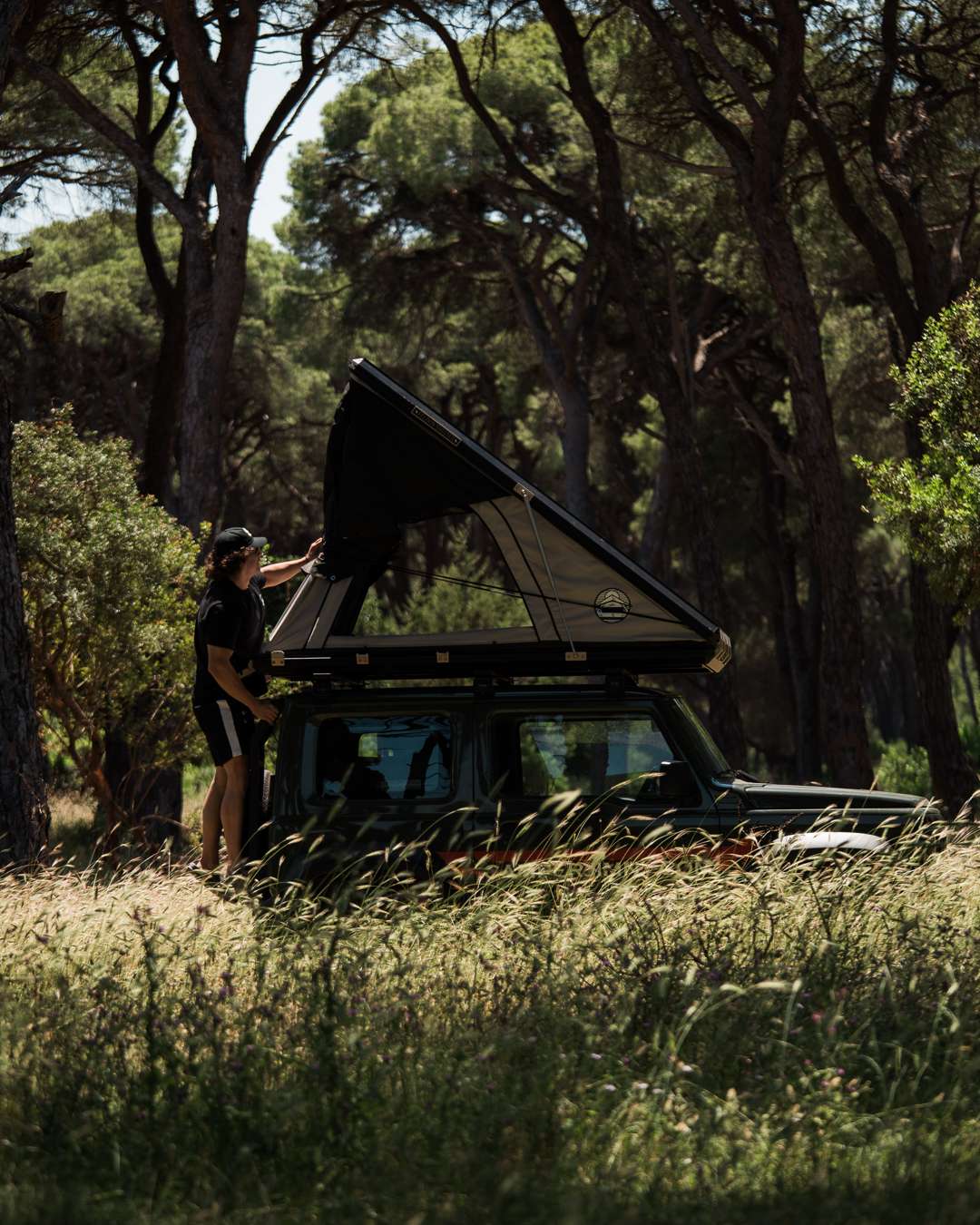
Eventually you pack up. The tent comes down quickly and everything has its place in the vehicle, so leaving doesn’t feel like work.
Then we drive.
Usually not on the fastest road.
We’d rather take the smaller one, stop when something looks interesting and let the day decide a little bit where we’re going.
Maybe around lunchtime we find a small village, sit somewhere in the shade and eat whatever is local.
No reservation. No rush to leave.
If the place feels good, stay longer.
In the afternoon, maybe drive somewhere higher and cooler, or towards the coast depending on the day.
And before it gets dark, reach the place you’ve chosen for the night.
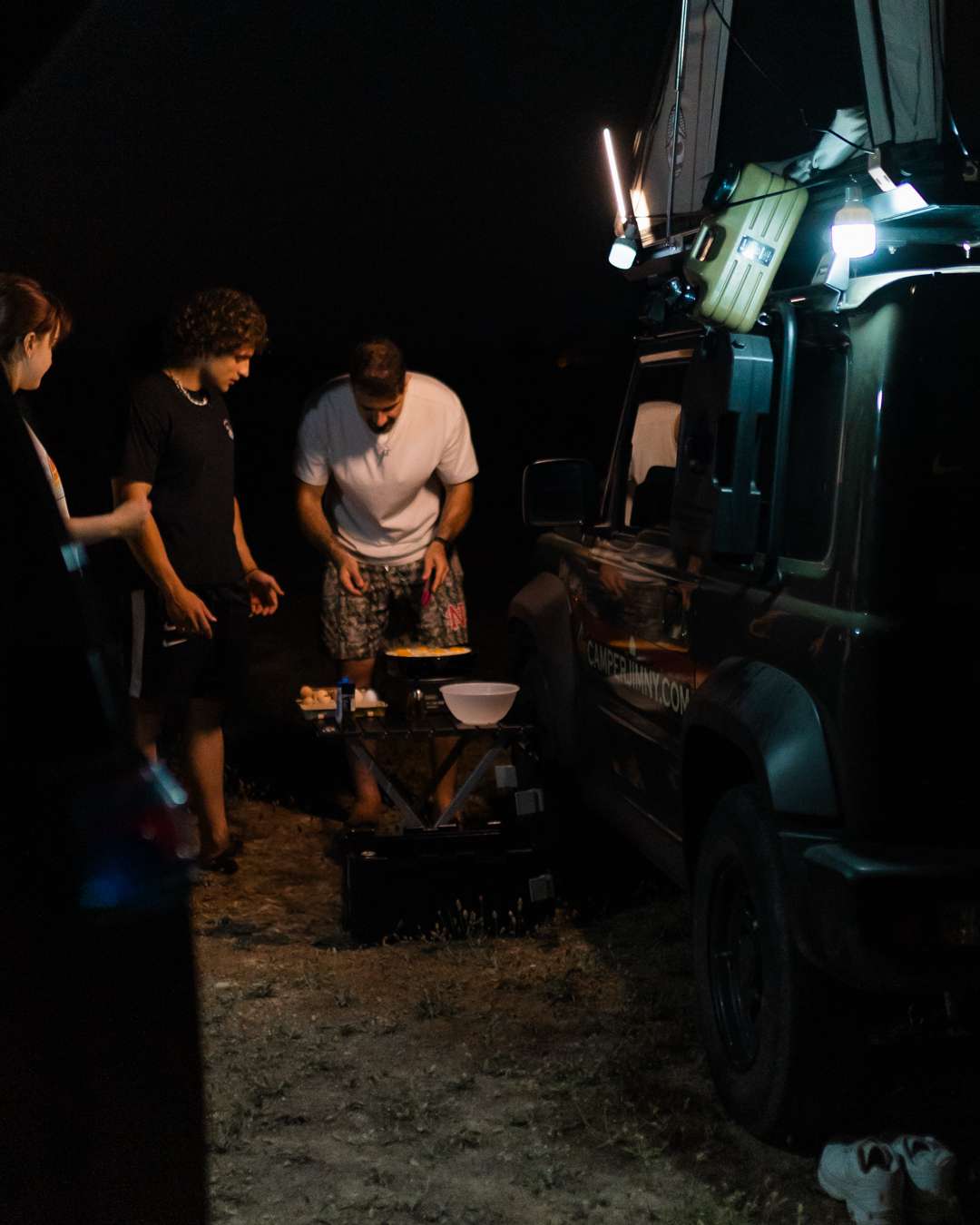
Open the tent, cook something simple outside, maybe have a drink, and just sit there while the light changes.
That’s pretty much the perfect day.
Not because you covered a lot of kilometres or saw ten different places.
Because nothing felt rushed.
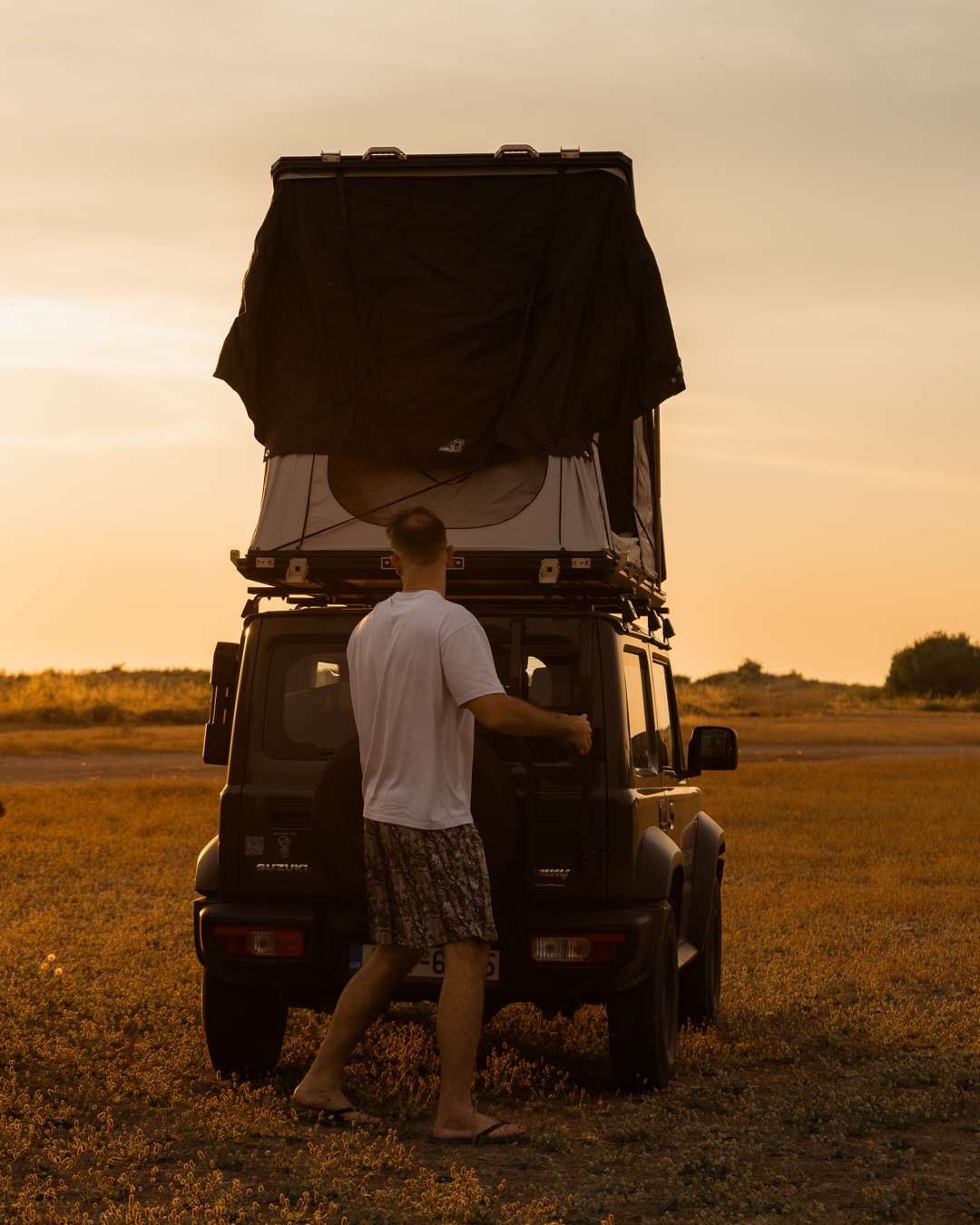
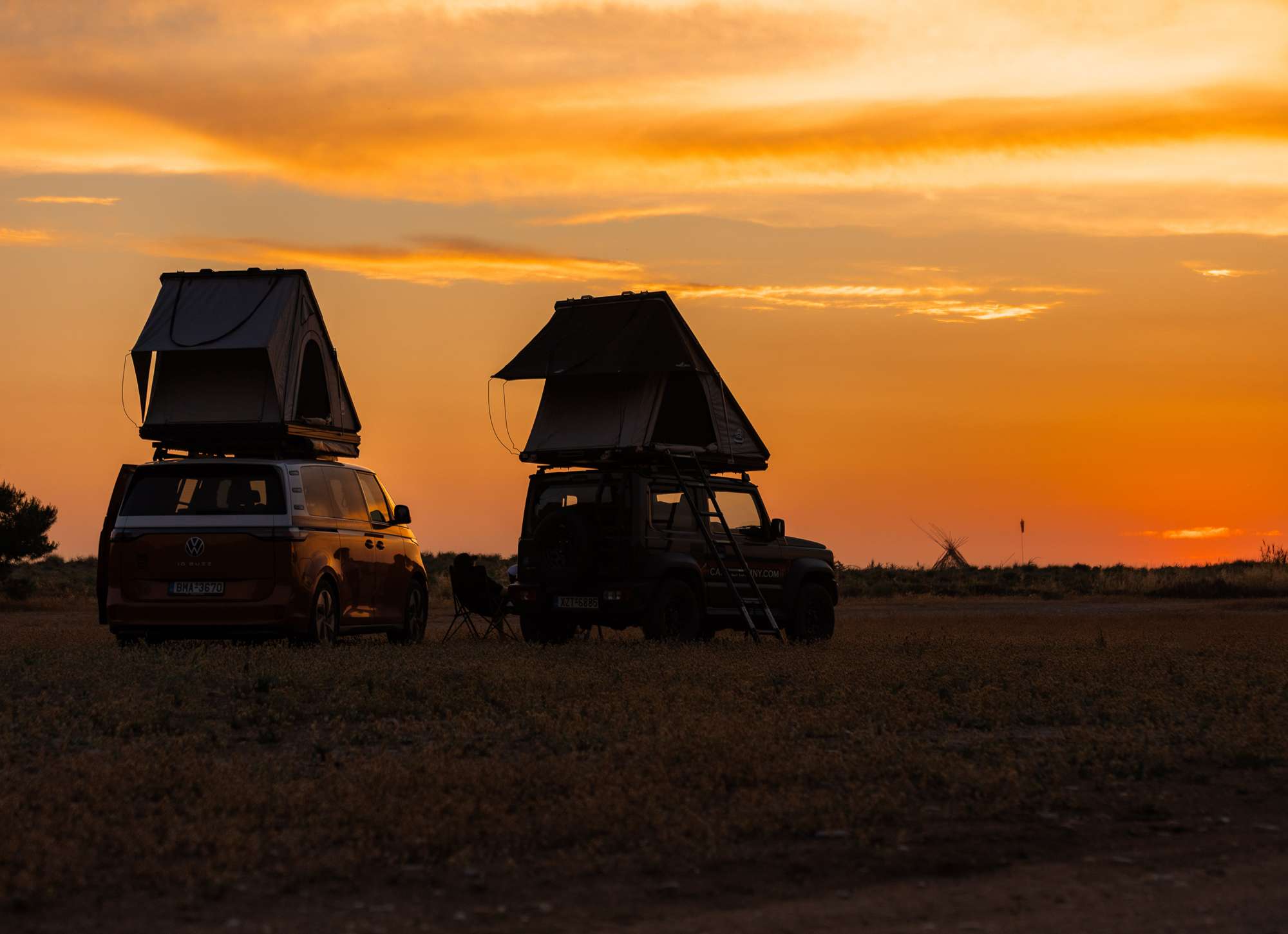
The Jimny is obviously a pretty small vehicle. Why does it work so well for exploring Greece?
Mostly because Greece is full of small roads.
Mountain roads that wind up towards villages. Old streets that were built long before anyone was thinking about cars. Coastal roads where everything feels tighter and you want a vehicle that doesn’t make the road itself stressful.
That’s where the Jimny makes sense.
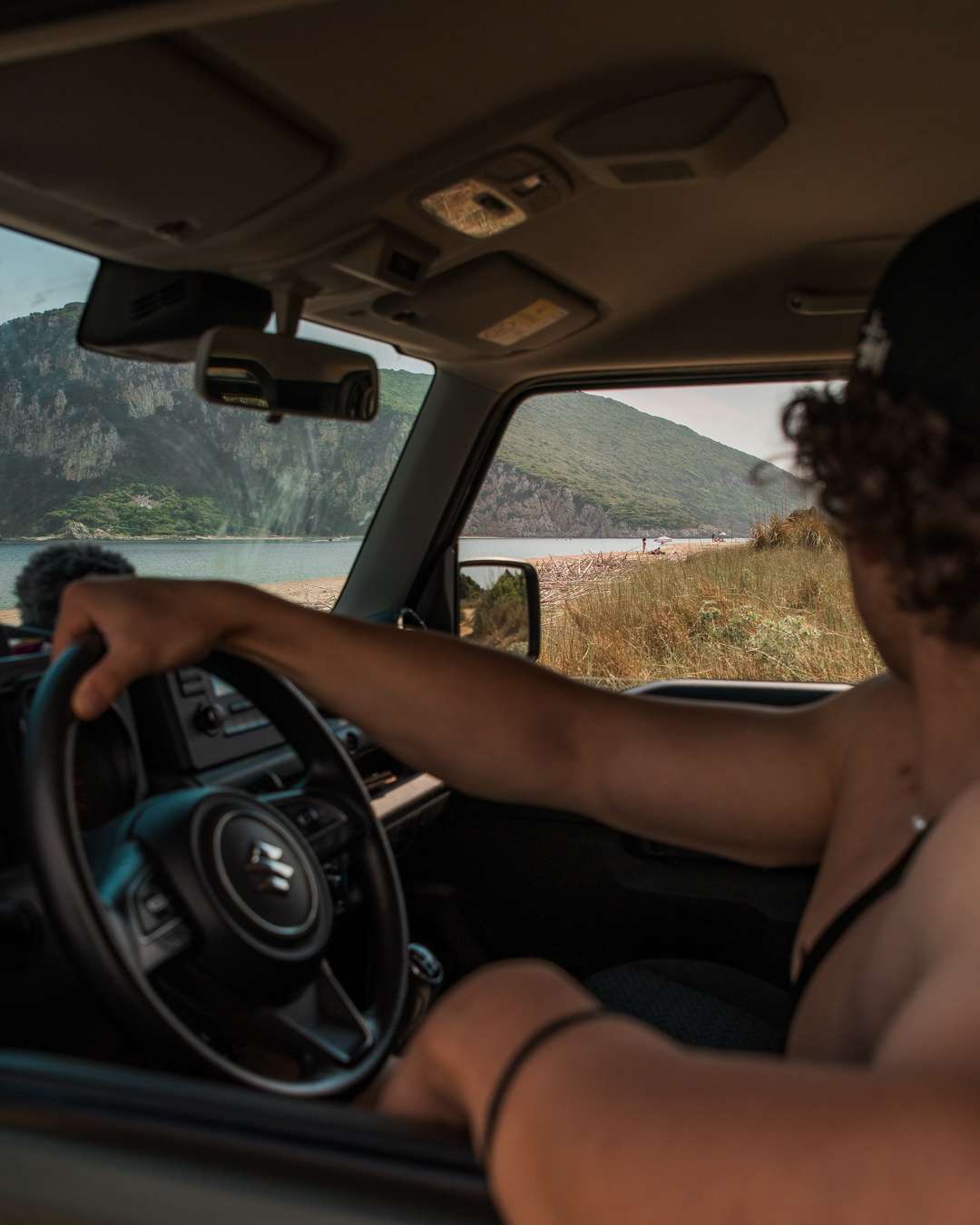
It still feels like driving a normal car, so even people who haven’t driven anything like it before usually get comfortable with it quite quickly.
Narrow roads feel easier. Small villages feel easier. Parking feels easier.
And when you want to take a slower road, turn around, or stop somewhere properly for a view or a coffee, the size really helps.
But I think the small size changes the way you travel as well.
You bring less.
You don’t try to carry your whole house with you. You keep things simple — clothes, food, the basic things you need, and that’s enough.
For us, that’s part of the experience.
It keeps the trip light.
You’re not spending the day managing a big vehicle or a complicated setup. You’re just moving, stopping when something catches your eye, taking the smaller road and staying a little longer when somewhere feels right.
That’s why the Jimny works so well for the kind of travelling we like.
Simple, slow, and easy enough that the vehicle never becomes the main thing.
Where does the Jimny come into its own compared with a conventional campervan?
A campervan is really a small home on wheels.
You sleep inside, you have more space, and if the weather turns you’ve got somewhere warm and dry to retreat to. For some trips, that’s exactly what you want.
The Jimny is a different kind of experience.
With the Jimny, the vehicle is more like your base and most of the trip happens outside it.
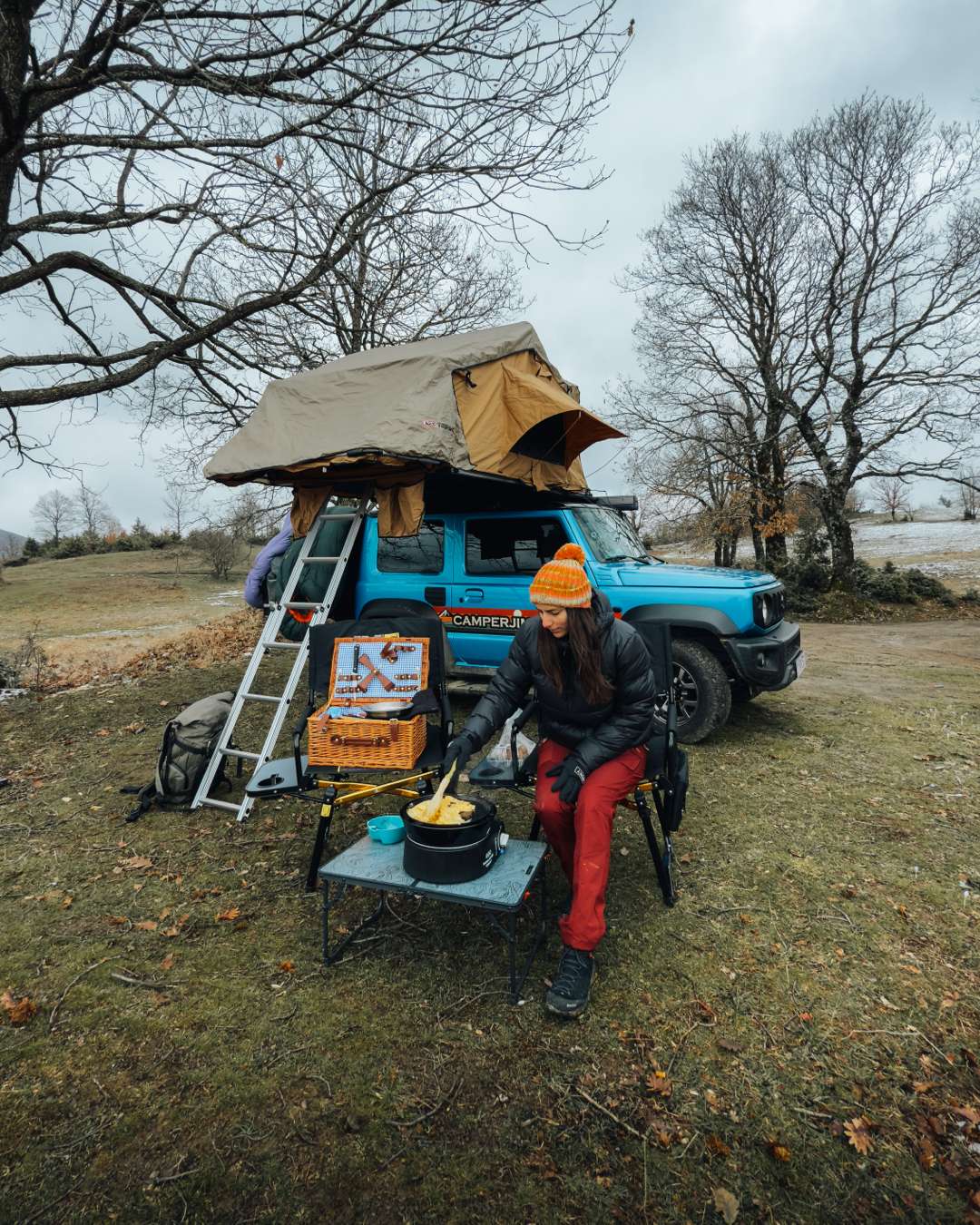
You cook outside, eat outside, sit outside in the evening, and then climb up into the rooftop tent when the day is done.
It feels a little more open. A little simpler.
You’re closer to whatever place you’ve chosen to spend time in.
Where the Jimny really comes into its own is on the smaller roads — mountain villages, winding coastal routes, narrow streets, quieter places where a bigger vehicle can sometimes make the drive itself feel like work.
With the Jimny, you tend to feel more relaxed about taking those roads and seeing where they lead.
But it isn’t the right choice for everyone, and we’re very open about that.
If someone is travelling with young children, wants more indoor space, or is visiting in colder weather and likes the idea of being able to close the door and stay inside for the evening, then a campervan can make much more sense.
That’s exactly why we have different kinds of vehicles.
Neither one is better.
They just suit different ways of travelling.
The Jimny is for people who are happy to keep things simple, spend most of the day outside and let the vehicle support the trip rather than become the trip.
Do guests need any previous off-road or camping experience, or can someone turn up having never done anything like this before?
No, not at all.
Actually, many people who come to us are completely new to this, and we really like that because they’re exactly the kind of people we had in mind when we started CamperJimny.
When someone collects the vehicle, we take our time.
We show them how the tent opens and closes, where everything is kept, how the cooking setup works, and all the small things that make the trip easier.
Once they’ve done it once, most people are completely comfortable with it.
And you don’t need off-road experience either, because this isn’t about technical off-roading.
The idea is to explore normal accessible roads — paved roads, gravel, maintained dirt roads, forest roads and easy countryside routes. Nothing that needs special driving skills or puts the vehicle into difficult terrain.
The Jimny simply makes those smaller roads and tighter places feel a bit easier.
For people who are completely new to camping, we sometimes suggest spending the first night at an organised campsite.
Not because the setup is difficult.
It just gives you an easy first evening to work out your rhythm — opening the tent, cooking outside, where you keep things, what you actually use and what you don’t.
After that, most people settle into it very quickly.
And if something comes up during the trip, they can message us. There’s always a real person on the other end.
You don’t need to arrive knowing everything.
You just need to be comfortable trying something a little different.
Usually, by the second morning, it already feels normal.
What is included with the vehicle when somebody collects it, and what should they bring themselves?
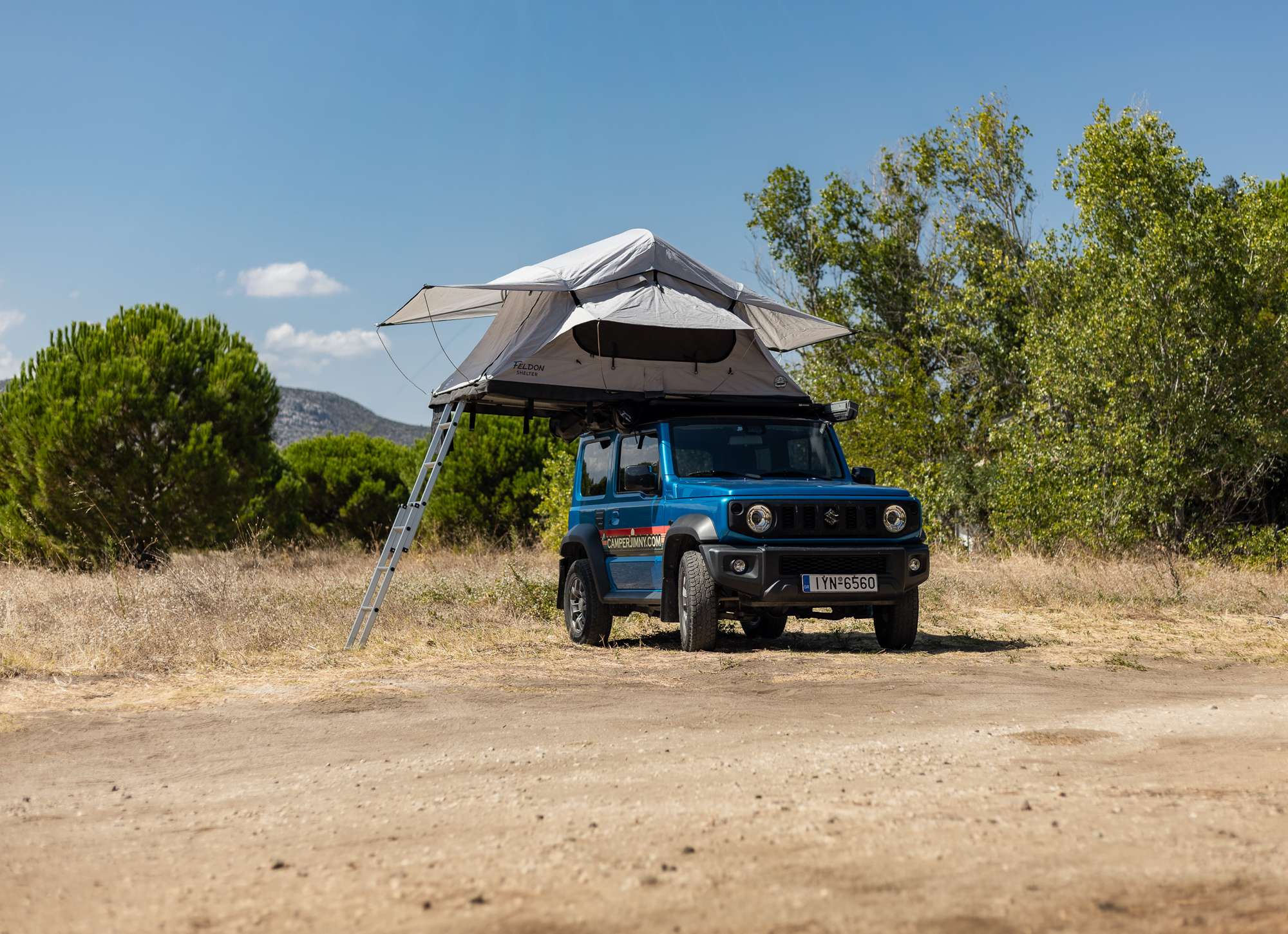
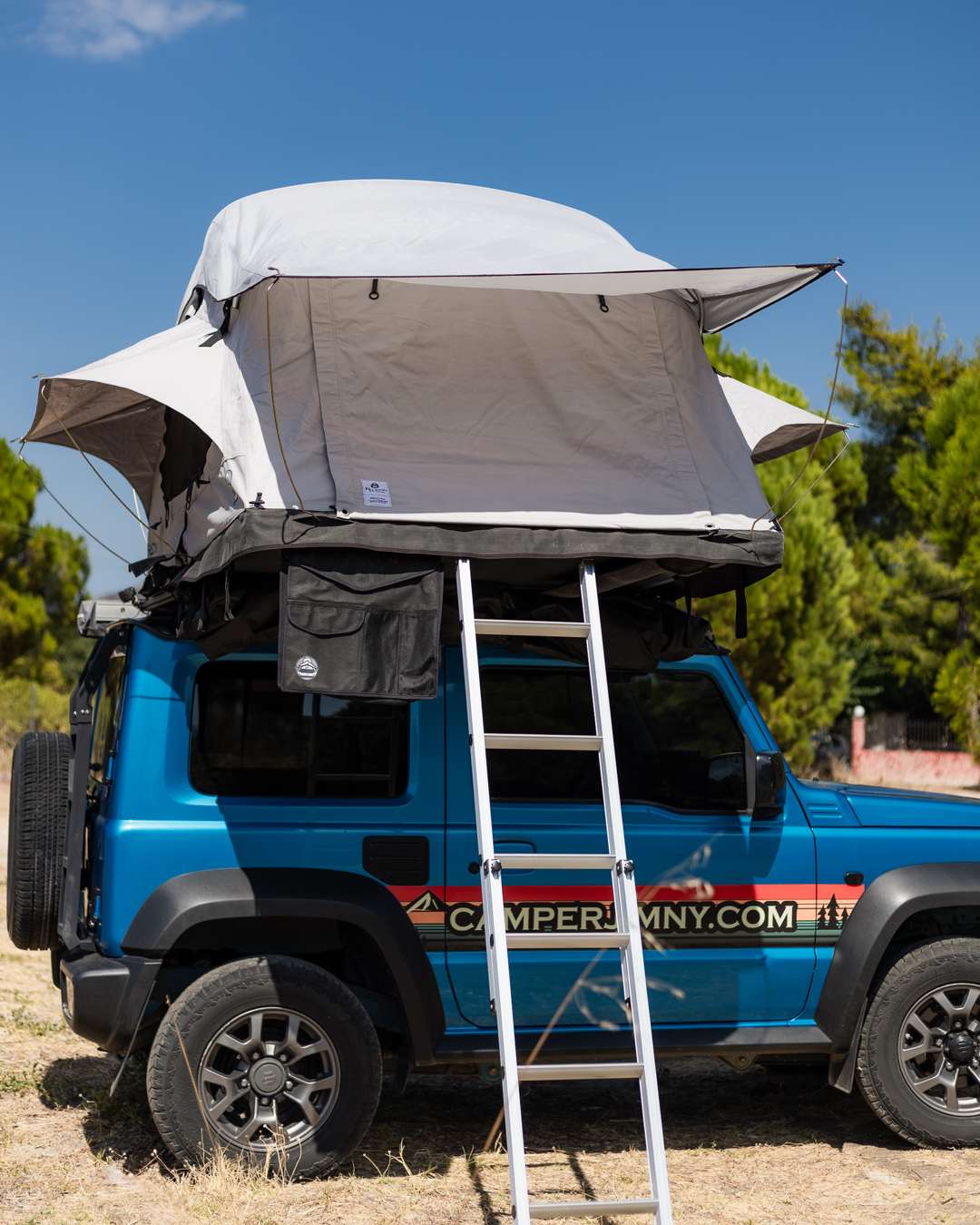
When you collect the vehicle, the rooftop tent is already on the roof. The mattress stays inside, so setting up for the night only takes a few minutes.
Before you leave, we do a one-to-one walkthrough. How the tent opens and closes, where everything is packed, and anything specific to that vehicle. No rush. Ask anything.
The kitchen is already there. A gas stove, pots and pans, plates, cups, knives and forks. A fridge or cooler, depending on the vehicle, and a table and chairs. Olive oil and a few spices — because in Greece, cooking outside should taste good.
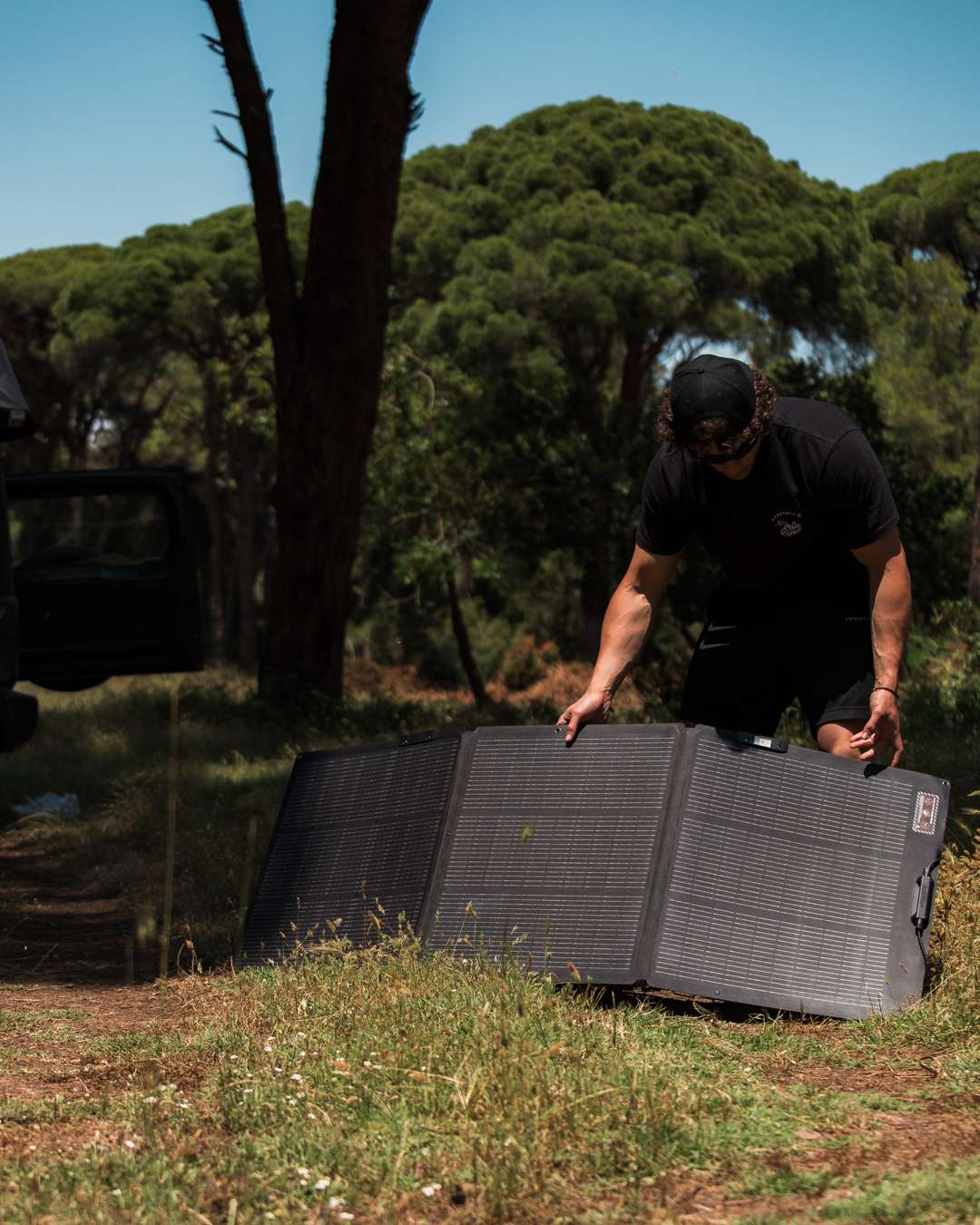
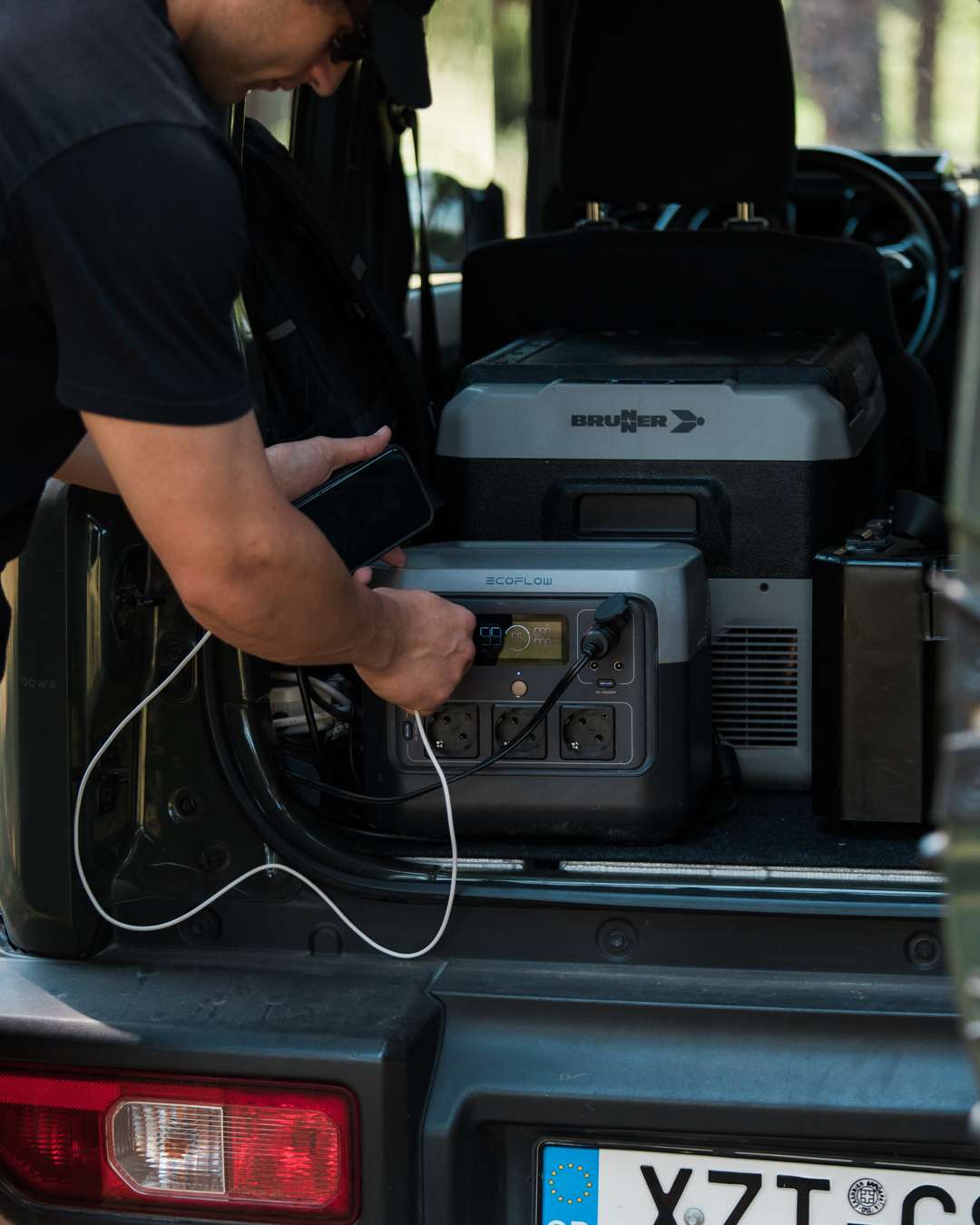
There’s also a power station with a solar panel, so phones and cameras stay charged without having to think too much about it.
A second driver is included, along with insurance and roadside assistance.
One honest note:
You can use normal accessible dirt, gravel and forest roads, but this isn’t a technical off-road rental. Damage caused by misuse or difficult off-road driving isn’t covered. So we always say: take those roads slowly, use common sense, and if something doesn’t feel right, turn back.
What should you bring?
Your own bedding. A sleeping bag, or a duvet and pillows if you like a bit more comfort. Layers, because evenings in the mountains can get cool, even in summer. Your food, and a headlamp.
And honestly, not much more. The less you bring, the easier everything feels.
What is sleeping in a rooftop tent in Greece actually like?
Better than most people expect.
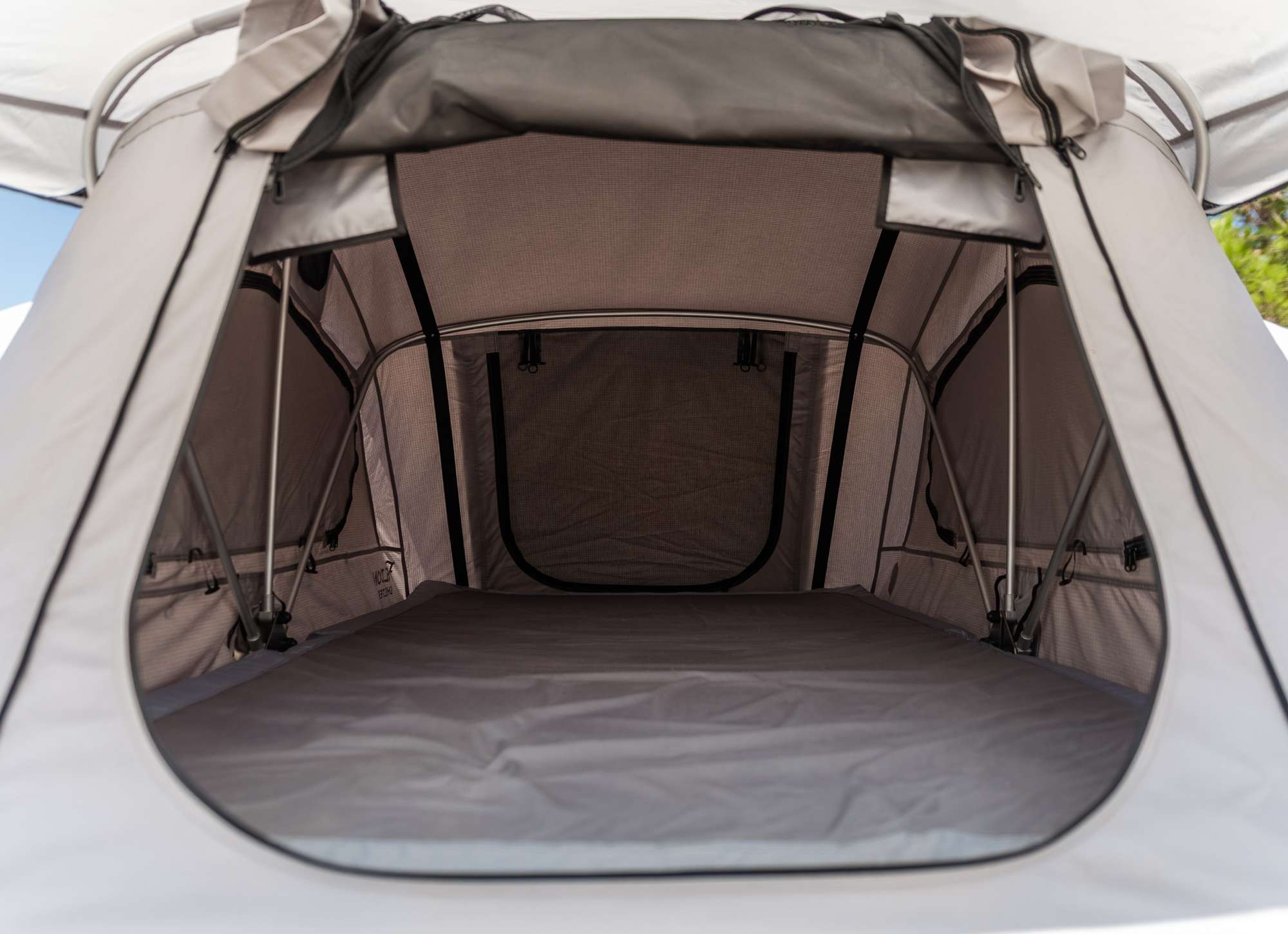
The first thing is that you’re off the ground. Once the vehicle is parked properly, you climb up and you’ve got a proper flat mattress waiting for you. It feels much more like a real bed than people imagine before they try it.
In summer, you can leave the windows open with just the mesh closed. There’s air moving through the tent. You hear the crickets, sometimes the sea, sometimes almost nothing at all.
Up in the mountains, it’s different. The evenings can get cool, you pull the sleeping bag up a little higher, and honestly, that’s often when you sleep best.
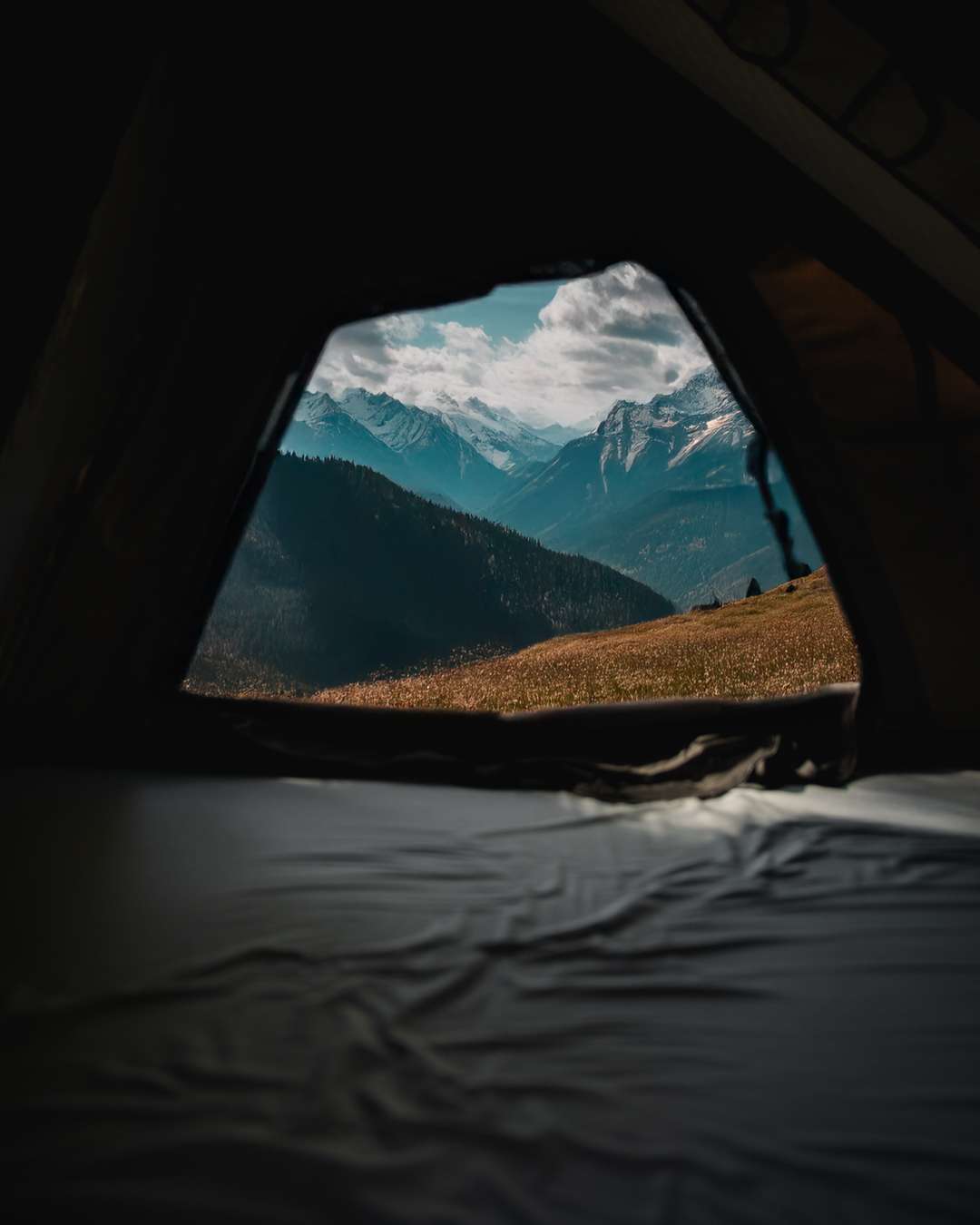
And then there’s the morning. The light comes through the tent slowly. You unzip it, and whatever is outside is the first thing you see. No corridor, curtains and no checking the view from a balcony.
That’s often the moment people remember most. Not necessarily the driving or the places they ticked off. Just that first look outside, before the coffee is even made.
It’s simple. And that’s exactly why it works.
What time of year would you choose for your own road trip around Greece, and why?
For me, probably the edges of the season.
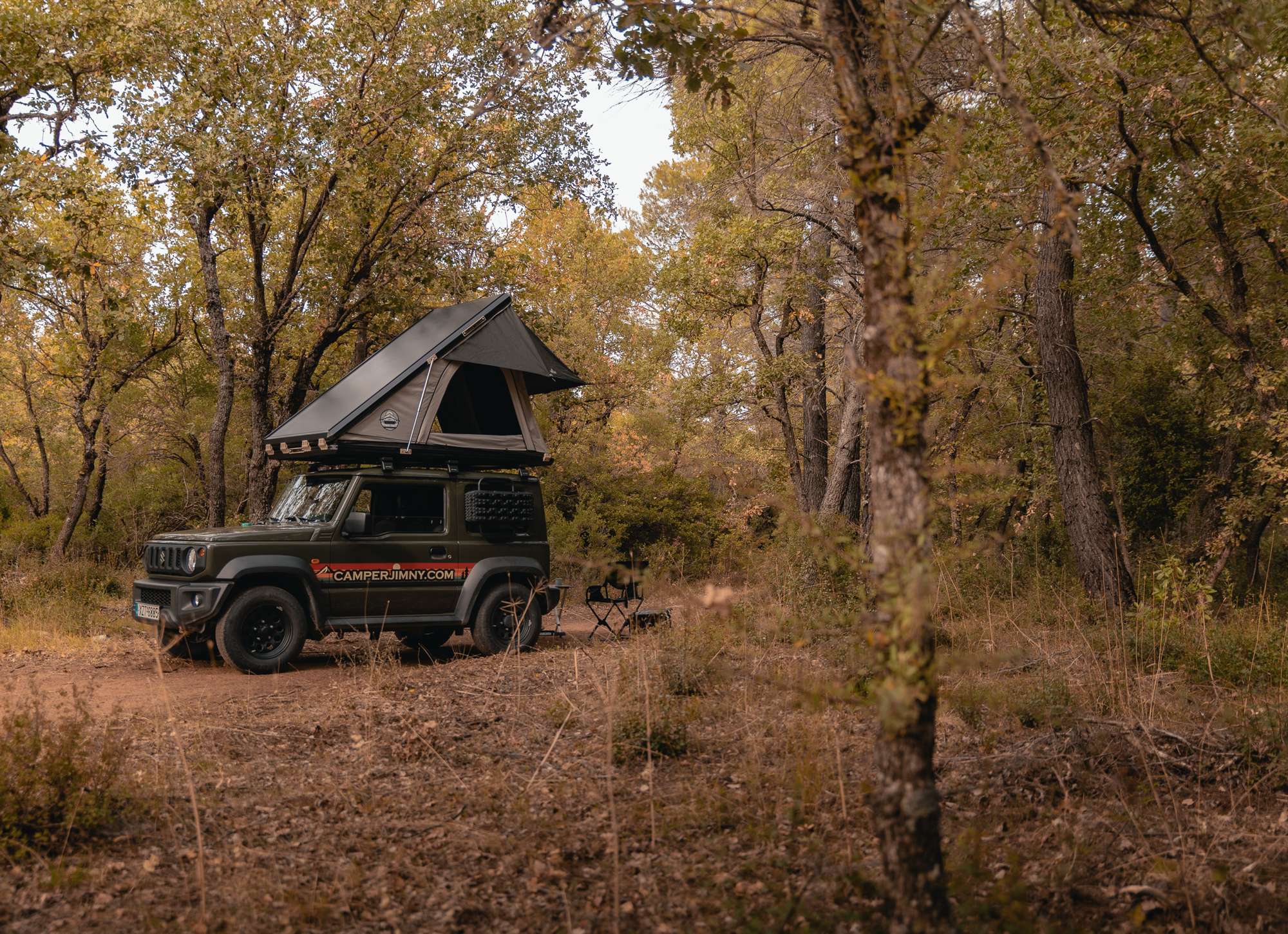
Late spring is beautiful because everything still feels alive. The hills are green, there are flowers everywhere, the mountains can still have a bit of snow on top, and the days are warm without feeling heavy.
Then there’s autumn. September and October are probably my favourite months for a road trip. The sea is still warm from summer, the roads are quieter, the light gets softer, and the whole pace of travelling changes a little. You can swim in the afternoon and then need a jacket later in the evening if you head higher.
Summer is beautiful too, of course. But it’s hotter and busier, so that’s when we usually like to spend more time in the mountains, forests and higher places where the evenings cool down.
Winter is completely different. It isn’t for everyone, but Greece can feel incredibly quiet then. Mountain villages, empty roads, colder air, a completely different mood.
That’s one of the things we really like about Greece — it can work almost all year round, depending on what kind of trip you love.
If you want beaches and long evenings outside, summer is obvious. If you prefer hiking, cooler weather and quieter roads, spring and autumn are probably better. And if you love mountain villages and a slower, colder atmosphere, winter has its own character too.
So for me, the best time is probably late spring or early autumn. Not because summer is bad. Just because those seasons make it easier to slow down, stay outside longer and travel without feeling like you have to rush anywhere.
And really, there isn’t a wrong time. It just changes what kind of trip you have.
Most visitors know the Greek islands. Where should an adventurous traveller look on the mainland instead?
The islands are beautiful, no question. But I think a lot of people arrive without realising just how much of Greece there is away from them. And some of the best road trips are on the mainland.
Central Greece is a great place to start. You can visit Delphi, drive through the mountains around Parnassos and then, not much later, be sitting by the water somewhere like Galaxidi. That change of landscape is very Greek.
Then there’s Evrytania and the Agrafa mountains. Around Karpenisi you get forests, rivers, mountain roads, stone bridges and small villages where life still seems to happen around the square. It feels a long way from the Greece most people imagine before they arrive.
Lake Plastiras has a completely different rhythm again. Water, forest and mountains around you. It’s somewhere that makes you naturally want to slow down.
Further north you have Mount Olympus, and if you really want to keep going, places like the Prespa lakes show you another side of the country again — open landscapes, mountains and a feeling of being much further away from the busy summer Greece.
And then, very close to Athens, there’s Evia. Technically it’s an island, but you can simply drive across the bridge, and very quickly you can find yourself among mountains, forests and long stretches of coastline. It’s one of those places that reminds you that you don’t always have to travel very far to feel like you’ve gone somewhere completely different.
For us, though, adventurous travel doesn’t necessarily mean doing something difficult. It can be much simpler than that. Take the slower road. Turn the trip into part of the destination. Stop somewhere you hadn’t planned to stop. Stay an extra night because you like it there.
Sometimes that’s enough.
What are the rules around camping and travelling off the beaten track that visitors need to understand before they arrive?
This is probably one of the most important things to understand before the trip.
In Greece, the easiest way is to plan your nights around organised campsites. The rules outside them aren’t always simple, and they can vary from place to place. So we keep it easy: we help you plan around places where you can stay without worrying about it. That way you can relax in the evening, instead of wondering if you’re in the right spot.
There are campsites by the sea, in the mountains and near lakes, and some stay open outside the main summer season too.
With every booking, we share our own list of places and coordinates, so you’re not searching at nine in the evening wondering where to go.
A campsite also means a shower, some shade, sometimes a small taverna or café. And very often, a conversation with someone who knows the area better than any app.
During the day, the same idea applies. Normal roads, gravel roads, forest roads, easy countryside routes. That’s what the vehicles are for. Not technical off-roading. And if a road looks questionable, ask us first. We’d much rather get a message before than hear about a problem afterwards.
In summer, fire risk is taken very seriously in Greece. Avoid open fires, respect local restrictions and warnings, and if you’re not sure, don’t do it. On high-risk days, some forest areas can also be closed to traffic. If that happens, just choose another road.
Don’t drive onto beaches. Park properly and walk the last part.
Respect private land, farms and small villages. A lot of the roads you travel on pass through places where people live and work, so travelling quietly and respectfully matters.
Basically, it’s about travelling in a way that means you’re welcome to come back. Leave places the way you found them. Or a little better.
What is the most memorable trip or story you have heard from somebody who rented one of your vehicles?
One of our favourites is a couple from Germany who rented one of our vehicles over Greek Orthodox Easter and headed off on their own.
They ended up in a small village in Zagori. And on Easter Sunday, the village invited them to join the celebration.
If you’ve never seen Easter in a Greek village, it’s a lot. Lamb turning on the spit from the morning, red eggs, music, long tables, everyone together. And food. So much food. They tried everything.
They didn’t plan any of it. They just happened to be there, and people made space for them at the table.
When they came back, that’s all they wanted to talk about. Not the roads, not the views. That Sunday.
And honestly, that’s Greece. Sometimes the best part of the trip isn’t a place. It’s the people you meet there.
Have any guests discovered somewhere through CamperJimny that even you hadn’t expected them to find?
All the time, honestly.
Greece has so many small places. Villages at the end of a road, little beaches, a spring by a chapel, a taverna with three tables. Guests send us photos and we’re often asking, “where is that?”
The funniest one was a couple who spent the night on a village football pitch. They asked the caretaker if they could stay, and he just said yes. So they slept on the roof of the Jimny, right next to the goalposts.
That’s one of the things we love. Even after all these years, people still show us parts of Greece we didn’t know.
What has gone wrong on a trip that makes a good story now?
A couple on Kefalonia once took a track that was a bit more serious than what our vehicles are meant for. They switched into low-range 4×4, but they didn’t have much experience with it and pushed it too hard. The clutch didn’t survive.
So there we were in Athens, looking for a clutch for a Jimny, as fast as possible. We found one, and sent it the most Greek way possible: on the KTEL, the intercity bus, which goes over on the ferry.
At the same time, we found a small local garage on the island. They were really kind. They waited for the part and fitted it the very next day.
The couple went back on the road, and the trip carried on.
It’s funny now. But it also shows why we always say: you don’t need experience for normal roads, gravel roads and easy tracks. Technical off-roading is a different thing. And if something does go wrong, you’re not on your own. We’ll sort it out together.
If somebody only had three or four nights, where would you tell them to go? What would you suggest if they had ten days?
With three or four nights, I’d say: don’t try to do too much. Pick one area and let it be enough.
Evia is a great option. You cross the bridge, and very quickly you’re somewhere else. Mountains, forest, quiet beaches, small villages. You spend less time driving and more time actually there.
Or a short loop to Delphi and Parnassos, finishing by the sea at Galaxidi.
Short trips work best when you’re not watching the clock. Two nights in one good place is often better than four nights in four places.
With ten days, it starts to feel like a real journey.
You could go north. Through central Greece, up to Meteora, and then into the mountains of Zagori. Maybe Pelion on the way back, with a night somewhere in between so the drive doesn’t take over the day.
Or the Peloponnese loop, with time for Monemvasia this time.
But even with ten days, we always say the same thing: leave some days empty. Not everything planned. That’s usually where the best part of the trip happens.
What food, roadside stops or local experiences should people make room for while travelling?
Honestly, food is a big part of the trip. And the best of it usually isn’t planned.
Start the morning at a village bakery. A warm pie, spinach or cheese, still in the paper bag. That’s breakfast.
Along the road you’ll see small stands. Honey, fruit, cheese, sometimes someone selling whatever came out of their garden that week. Stop. Buy a little. Ask what’s good.
The kafeneio in the village square is worth ten minutes too. A Greek coffee, older men playing cards, someone asking where you’re from. You don’t need a reason to sit there.
For lunch or dinner, look for a simple taverna, the kind without a big menu outside. Grilled meat, a salad, whatever the fish was that day, local wine. Often the best meals are in places you’d never find on a list.
And in summer, if you hear about a panigyri, a village festival, go. Music, dancing, long tables, everyone together. It’s one of the most Greek things you can see.
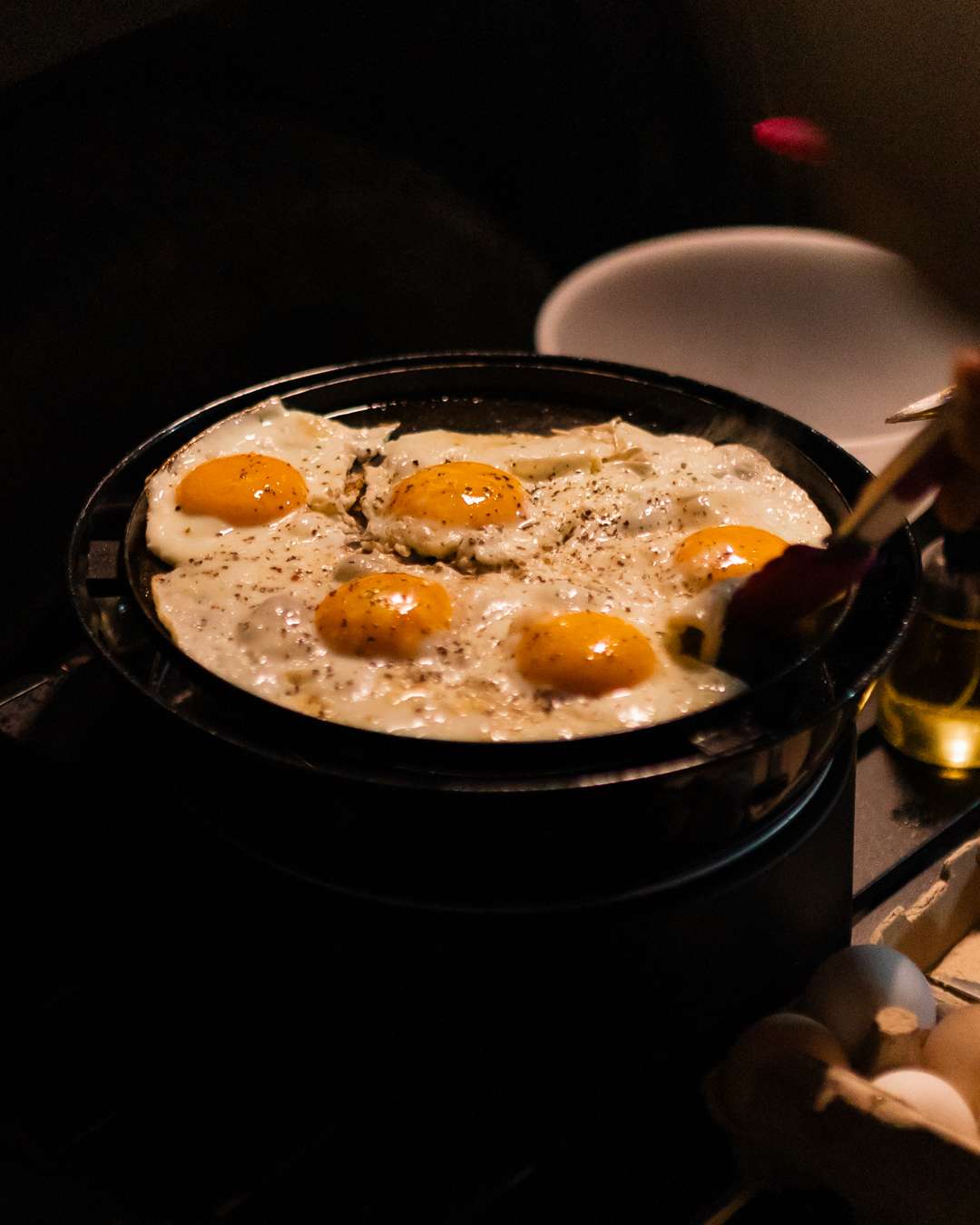
But some of our favourite meals are the ones people cook themselves. Bread from the bakery, tomatoes from a stand, local cheese, a bit of olive oil. A simple table outside. And nowhere else you need to be.
You’ve recently moved CamperJimny into new premises. What has changed, and what does the new base allow you to do that you couldn’t before?
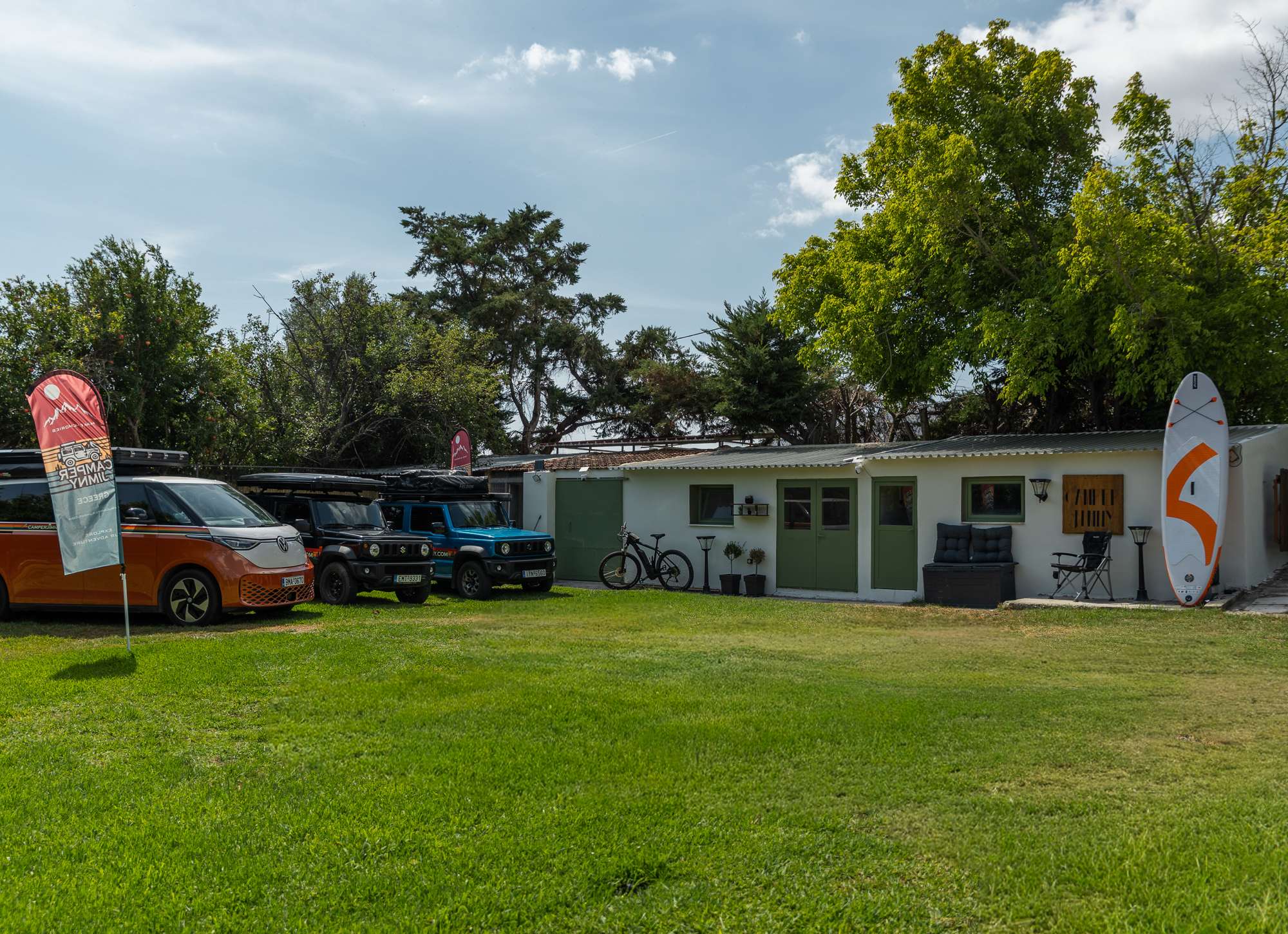
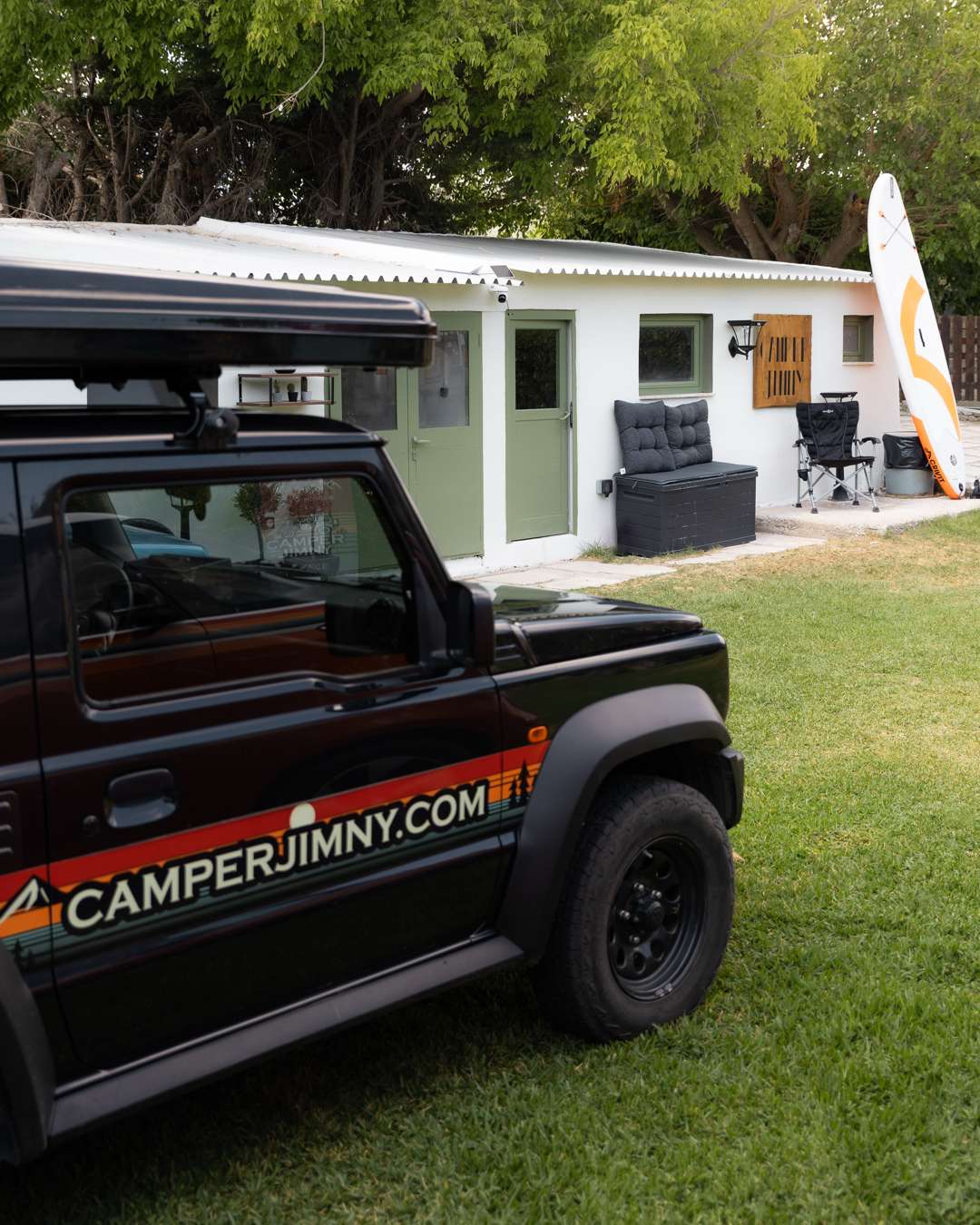
We moved our main base to Marathon, on the east side of Attica.
The biggest change is simple: space. For the first time, we have room to keep the whole fleet together, prepare every vehicle properly, organise the office side of things and store all the camping equipment in one place.
That sounds like a small thing, but it changes a lot. Tents, kitchens, chairs, equipment — everything can be checked, cleaned and packed calmly instead of feeling like a race before the next pickup.
There’s also parking for our guests. So if you drive to us, you can leave your own car there and start the trip directly with the CamperJimny.
But what we like most is the feeling of the place. It’s green and quiet, not far from Athens, but it already feels like you’ve left the city behind. So the trip doesn’t really start in traffic. It starts in nature.
And in the future, we’d love to build on that. One of the ideas is to give guests the option to spend their first or last night at the base, surrounded by nature, so the CamperJimny experience can begin before they even start driving.
And Marathon itself has a lot of character. It’s a place connected to one of the most famous moments in Greek history, and of course it’s the place that gave the modern marathon its name. You can visit the archaeological museum and the Tomb of the Athenians, explore the area around Lake Marathon, or head towards Schinias and the coast.
It’s also a very natural starting point for a road trip. From here, you can head towards Evia, north into mainland Greece, or south towards the Peloponnese.
We still arrange handovers from Agios Stefanos as well, so guests can choose what works best for their trip.
For us, Marathon is the kind of base we always wanted. Somewhere that already feels like the beginning of the trip.
Where did the original idea for CamperJimny come from?
It started with a trip of our own.
We travelled abroad in a motorhome, and we loved it. The slower pace. Being outside all day. Waking up somewhere new.
But when we thought about doing the same in Greece, something didn’t quite fit. A lot of the roads here are small. Narrow village streets, mountain roads, little coastal roads. With a big motorhome, some of those places simply aren’t as easy to explore.
So we started thinking about something smaller. The same feeling, but with more freedom to follow those roads.
And we thought, why isn’t this easy to do in Greece? We have the mountains, the coast, the villages, the weather. But back then, as far as we knew, there wasn’t really a way to just arrive and do it.
So the idea was simple. To make it possible here. Not only for people who already know camping and overlanding, but also for people who’ve never done anything like this before. Everything they need, ready, so all they have to do is decide to go.
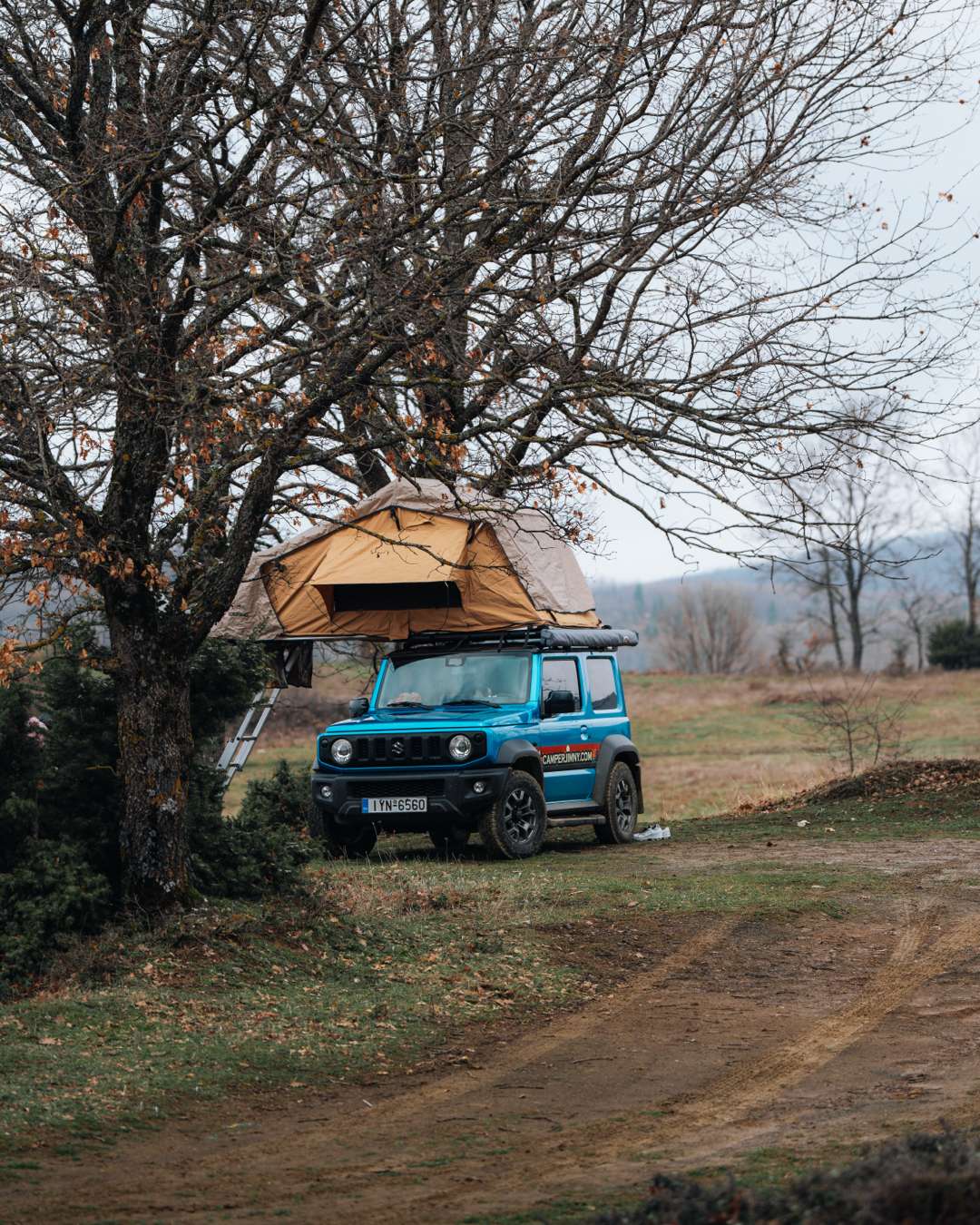
The first vehicle was my own Jimny. The blue one. We started with an ARB tent, and we wanted everything to be good quality and to last. And honestly, at the beginning we added a lot of accessories. Probably too many. Over time, we realised most of it wasn’t needed. So we kept what actually matters and let the rest go. That’s pretty much how we still think about it today.
Why a Jimny?
Because it’s compact, reliable, and feels completely at home on the smaller roads we like to travel. It’s not a fast car, and that’s fine. It fits the way we like to travel. No stress. Slow life.
And to be honest, Paul, your videos were part of it too. Watching them definitely gave us ideas along the way.
You now have vehicles beyond the Jimny. How do you help somebody choose between a Jimny, the Ranger and CamperBuzz?
Usually we just ask a few simple questions. How many of you are travelling? When? And what kind of trip do you imagine?
If it’s two people and you want to keep things light, the Jimny is perfect. Small, simple, easy on the smaller roads. Most couples who come to us end up in a Jimny.
If you’re more people, a family or a group of friends, the Ford Ranger Wildtrak makes more sense. It has two rooftop tents, more space for the gear, and it’s still very comfortable to drive for longer distances.
The CamperBuzz is a different kind of trip. It’s electric, it’s quiet, and you can sleep inside as well as up in the rooftop tent. For people travelling in cooler months, or with children, or who just want a bit more comfort in the evenings, it works really well. You plan your charging stops a little, and we help with that.
There isn’t really a better or worse vehicle. It’s more about which one fits the way you want to travel.
And if people aren’t sure, we talk it through. That’s part of the job.
What are you building towards next with CamperJimny?
Honestly, not “bigger” for the sake of it.
We want to keep doing what we do, just better. Taking care of every guest, and keeping the vehicles and equipment the way we like them.
One thing we’re working on now is a series of organised trips. Small groups, a few days together, with someone experienced leading the route. They’re for people who love the idea of this kind of travel but don’t necessarily want to set off completely on their own, especially the first time. You still get the roads, the camps, the mornings outside. Just with some company, and without having to plan everything yourself.
We’re also adding new vehicles, each with a slightly different setup. Not more of the same, but more choice, so different kinds of travellers can find the one that fits them.
And we’d like to show more of Greece outside the summer. Autumn, winter, spring. The mountain villages, the quiet roads, the seasons most visitors never really see.
As always, we test everything ourselves first. And we only keep what really works.
But the main idea stays the same. Make it simple for people to slow down, go outside, and see a different side of Greece.
Finally, somebody reading this in the UK has just decided that driving around Greece and sleeping on the roof of a Jimny sounds like a brilliant idea. What would you tell them before they book the flight?
First of all, good decision.
Athens is the easiest place to start with us. We’re not far from the airport, and we can arrange to meet you there too if that makes things easier.
Think a little about when you want to come. Spring and autumn are beautiful. Summer is great too — you just travel a little differently and maybe spend more time in the mountains and cooler places.
But don’t over plan it. Have a rough idea, choose a couple of places you’d really like to see, and leave some space in between.
Some of the best days will probably be the ones you didn’t plan.
Pack less than you think. Your bedding, a few layers, a headlamp. You can pick up food along the way, and the camping setup is already there.
And yes, we drive on the right. Coming from the UK, it might feel strange for a little while, but you settle into it. The Jimny is small and easy to place on the road, which helps a lot.
If you already have a Jimny at home, you’ll feel right at home in ours. And if you’ve never driven one, there’s a good chance you’ll understand why we like them so much by the end of the trip.
And if you have questions, just message us. Before you book, while you’re planning, or when you’re already on the road. There’s always a real person on the other end. That’s what we’re here for.
Then come, slow down, and let Greece do the rest.
About CamperJimny
CamperJimny is a 4×4 and rooftop tent rental company run by Georgios and Katerina, with bases in Marathon and Agios Stefanos near Athens. Their Suzuki Jimny, Ford Ranger and CamperBuzz campers come fully equipped for slow road trips around mainland Greece.
camperjimny.com · @gocamperjimny